AIZATUL NUR HIDAYAH JAMADI, MURALI REDDY, DAHLIA SHAHBUDDIN (USM), RAIHANA RIDZUAN*
*Corresponding author : raihana.r@utm.my
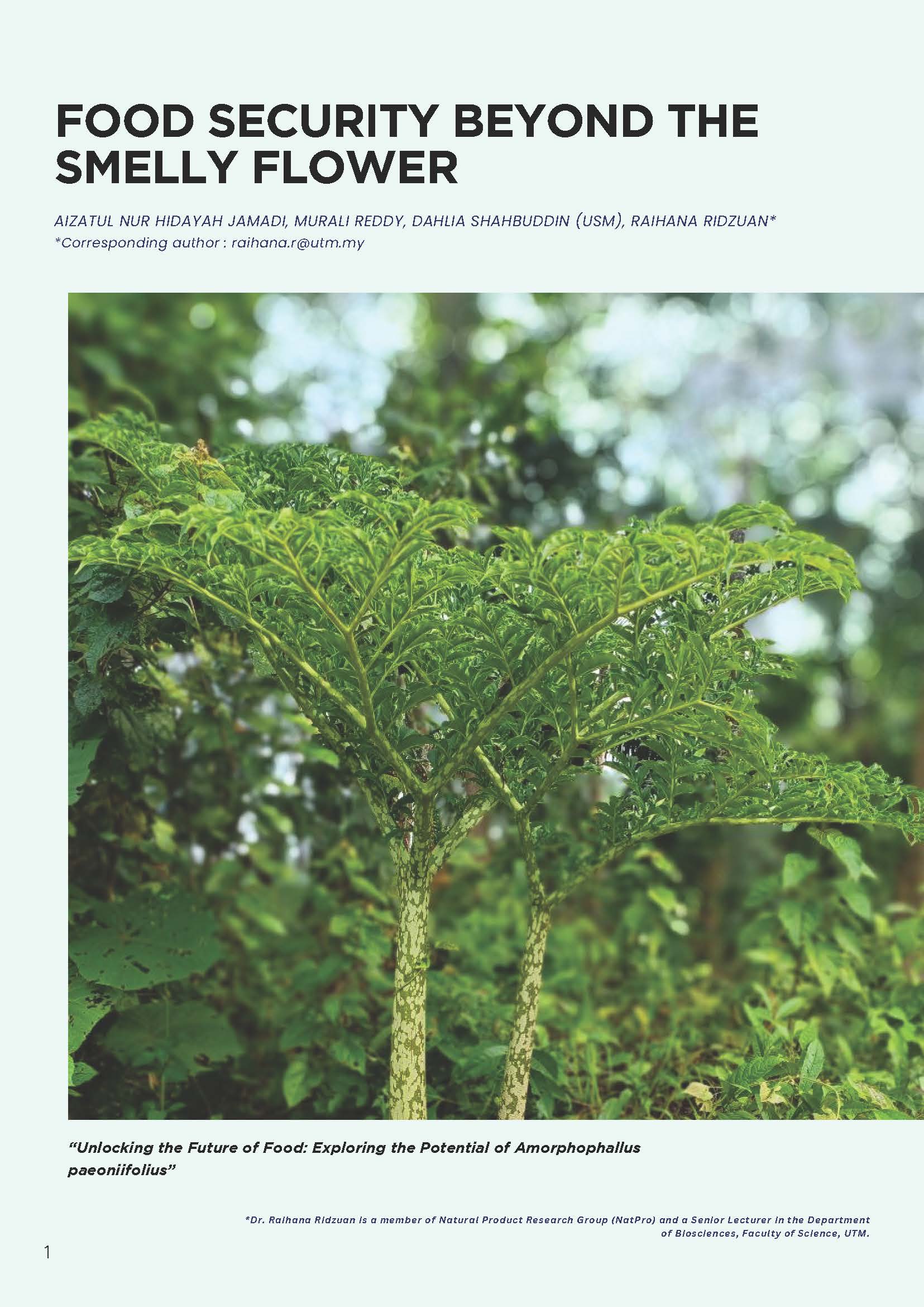
“Unlocking the Future of Food: Exploring the Potential of Amorphophallus paeoniifolius”
*Dr. Raihana Ridzuan is a member of Natural Product Research Group (NatPro) and a Senior Lecturer in the Department of Biosciences, Faculty of Science, UTM.
Are you familiar with Ubi Sarek,
often dismissed as just a “smelly flower”?
Beyond its pungent aroma lies a valuable food source with high potential to address global food security challenges. This underutilized tuber, rich in carbohydrates, proteins, and other essential minerals, such as calcium, phosphorus, iron, zinc and copper. It offers a sustainable and resilient alternative to conventional crops, especially in the regions that facing food scarcity and environmental pressures.
Amorphophallus paeoniifolius (A. paeoniifolius), or locally known as Ubi Sarek, is frequently referred as elephant foot yam. This tuber crop has high economic potential and nutritional values. Tuber crops are the second most important group of crops that can contribute to 5.4% energy to human towards global food security. A. paeoniifolius produces a large underground tuber that serves as a storage organ for nutrients. This tuber is edible and widely cultivated in tropical and subtropical regions for its starchy content.
In Peninsular Malaysia, A. paeoniifolius could be found in various habitats, including orchards, oil palm and rubber plantations, the fringes of paddy fields, and secondary forests. These habitats typically feature open, moist areas. Notably, populations of this species have been documented in Jerantut, Pahang, Gombak, Selangor, Gunung Angsi, Negeri Sembilan and Machang, Kelantan, where the habitat conditions align with its preferred environment.
A. paeoniifolius is a tropical tuber crop valued for its high production potential and popularity as a vegetable, which has various industrial and traditional medicine applications. Despite its economic and nutritional importance of Amorphophallus sp., there is limited understanding of the genetic variability for Malaysian Amorphophallus sp. using molecular markers.
A Guide to Propagating A. paeoniifolius
In traditional farming practices, is typically propagated using corms, the underground storage organs of the plant. The size of the corm plays a crucial role in cultivation success. Larger corms possess greater energy reserves, leading to faster sprouting and more vigorous plant growth. As a result, plants originating from larger corms tend to mature more quickly and produce harvestable corms within a shorter timeframe compared to those grown from smaller corms. Smaller corms, on the other hand, require a longer period of vegetative growth before they can produce harvestable corms of their own.
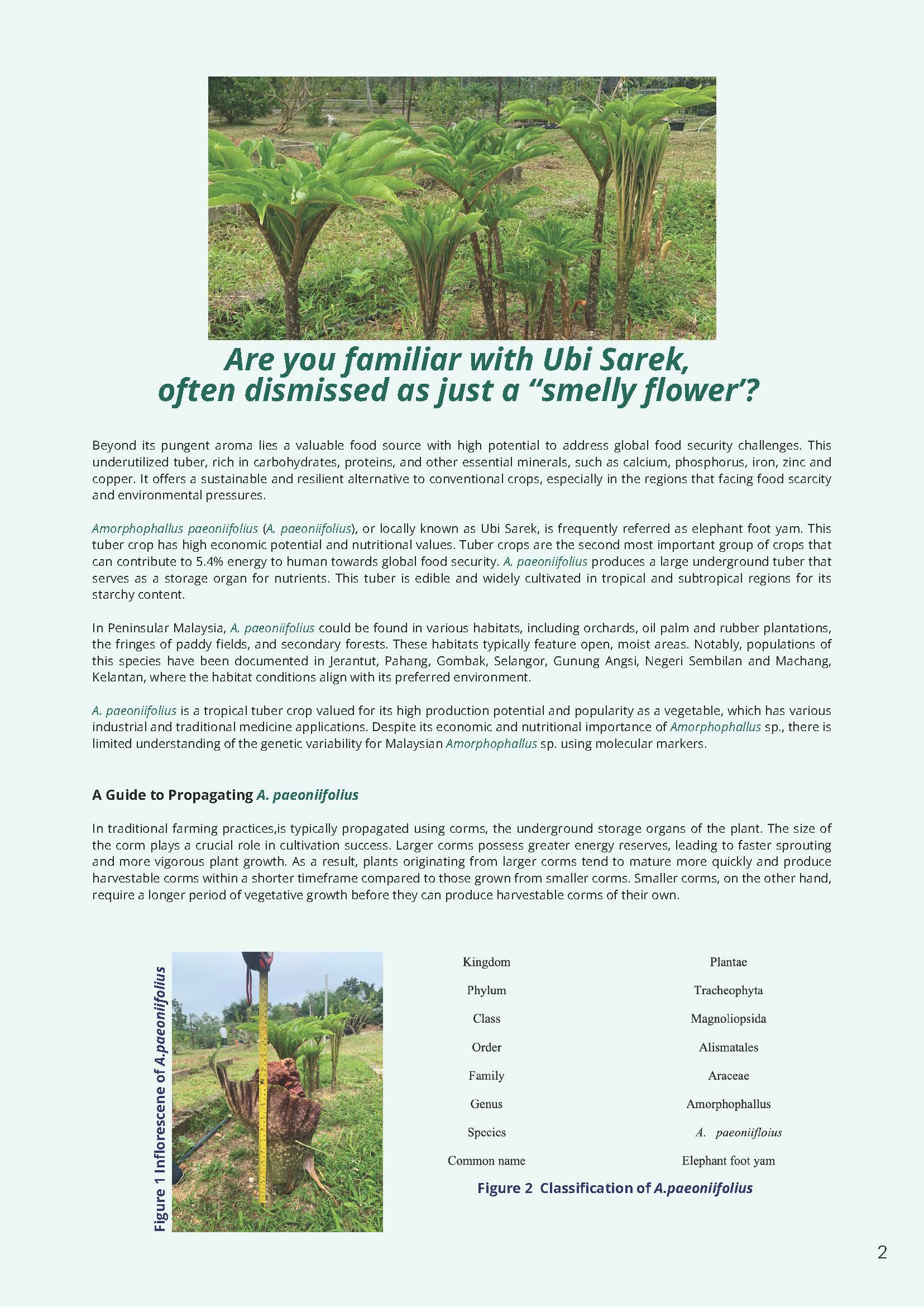
Figure 1
Inflorescence of A. paeoniifolius
Figure 2 Classification of A. paeoniifolius
Kingdom : Plantae
Phylum : Tracheophyta
Class : Magnoliopsida
Order : Alismatales
Family : Araceae
Genus : Amorphophallus
Species : A. paeoniifolius
Common name : Elephant foot yam
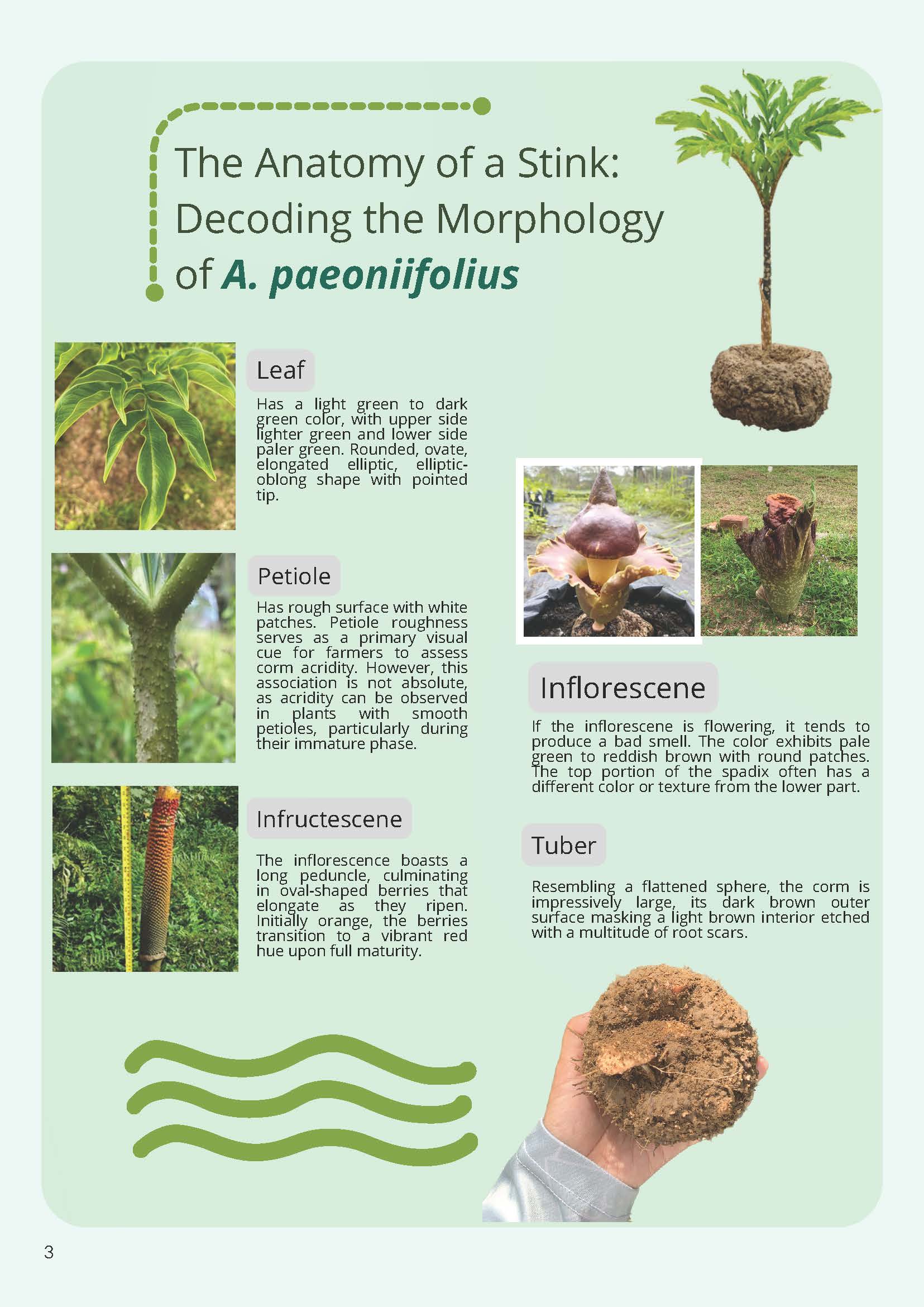
The Anatomy of a Stink:
Decoding the Morphology of A. paeoniifolius
Leaf
Has a light green to dark green color, with upper side lighter green and lower side paler green. Rounded, ovate, elongated elliptic, elliptic-oblong shape with pointed tip.
Petiole
Has rough surface with white patches. Petiole roughness serves as a primary visual cue for farmers to assess corm acridity. However, this association is not absolute, as acridity can be observed in plants with smooth petioles, particularly during their immature phase.
Inflorescence
If the inflorescence is flowering, it tends to produce a bad smell. The color exhibits pale green to reddish brown with round patches. The top portion of the spadix often has a different color or texture from the lower part.
Infructescence
The inflorescence boasts a long peduncle, culminating in oval-shaped berries that elongate as they ripen. Initially orange, the berries transition to a vibrant red hue upon full maturity.
Tuber
Resembling a flattened sphere, the corm is impressively large, its dark brown outer surface masking a light brown interior etched with a multitude of root scars.
The “Smelly Flower”: Unraveling the Mystery Behind the Stench
The unique scent compounds released by the flowers are crucial for attracting pollinators. These scents act as deceptive signals, guiding insects precisely to the areas that ensure successful pollination. Genus Amorphophallus emits deceptive scent compounds that indicate a specialized plant-pollinator relationship. Nearly a hundred Amorphophallus species have been chemically profiled, revealing a fascinating array of scents that range from the repulsive – mimicking carrion, excrement, and even nauseating gases – to the somewhat less offensive, such as the aromas of fish, sewerage, rancid cheese, fermenting fruit, and mushrooms.
So the secret behind smelly flower of A. paeoniifolius lies in its pollination strategy. Amorphophallus flowers have a wide variety of foul smells that attract insects, mimicking the odors of rotting things like dead animals and decaying matter. This clever trick helps the plants get pollinated, showing how they’ve evolved to attract specific pollinators.
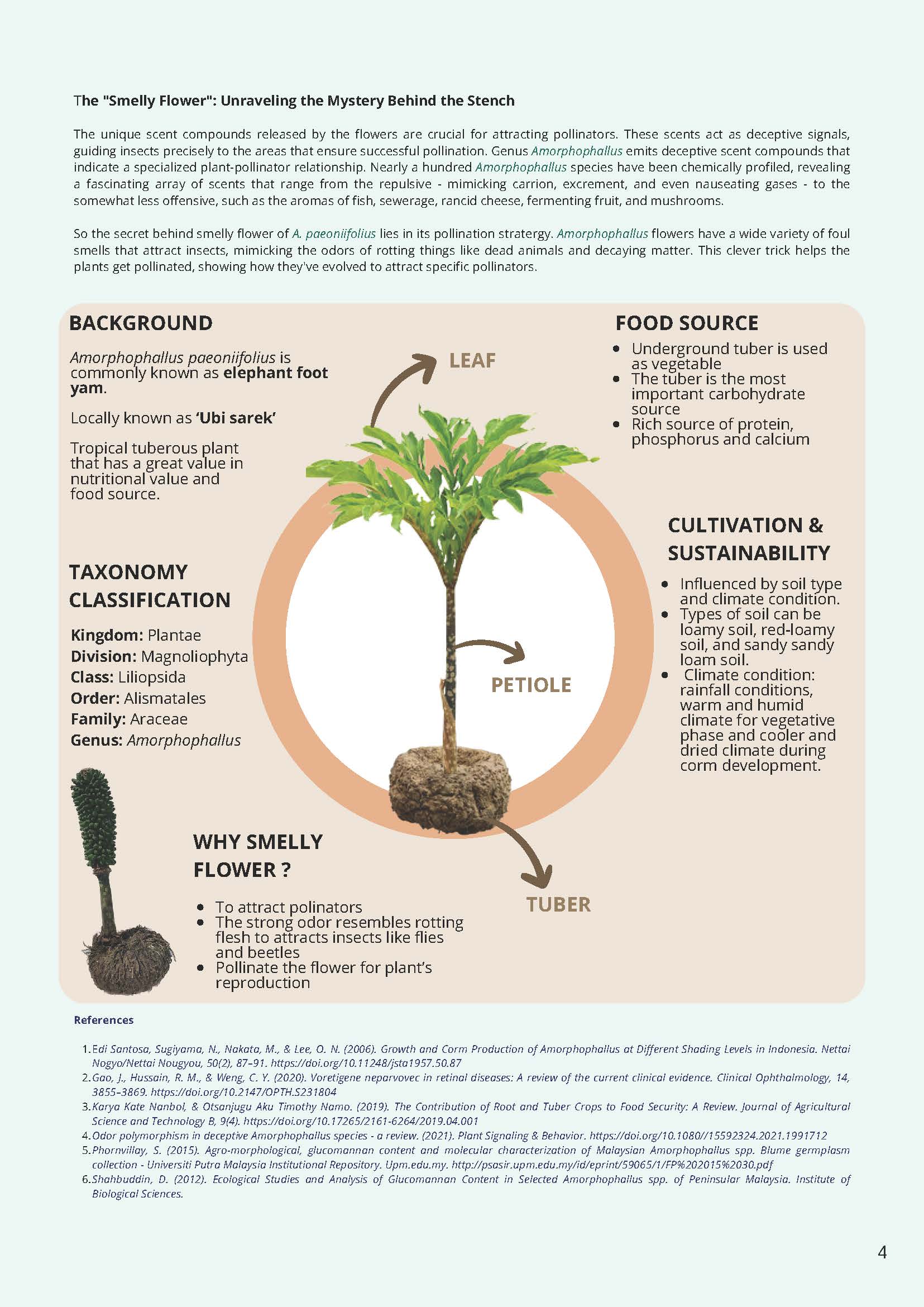
BACKGROUND
Amorphophallus paeoniifolius is commonly known as elephant foot yam.
Locally known as ‘Ubi serek’
Tropical tuberous plant that has a great value in nutritional value and food source.
TAXONOMY CLASSIFICATION
Kingdom: Plantae
Division: Magnoliophyta
Class: Liliopsida
Order: Alismatales
Family: Araceae
Genus: Amorphophallus
FOOD SOURCE
• Underground tuber is used as vegetable
• The tuber is the most important carbohydrate source
• Rich source of protein, phosphorus and calcium
CULTIVATION & SUSTAINABILITY
• Influenced by soil type and climate condition.
• Types of soil can be loamy soil, red-loamy soil, and sandy sandy loam soil.
• Climate condition: rainfall conditions, warm and humid climate for vegetative phase and cooler and dried climate during corm development.
WHY SMELLY FLOWER ?
• To attract pollinators
• The strong odor resembles rotting flesh to attracts insects like flies and beetles
• Pollinate the flower for plant’s reproduction
References
-
Edi Santosa, Sugiyama, N., Nakata, M., & Lee, O. N. (2006). Growth and Corm Production of Amorphophallus at Different Shading Levels in Indonesia. Nettai Nogyo/Kanto Nogyo, 50(2), 87–91. https://doi.org/10.11248/jisg1957.50.87
-
Gao, J., Hussain, R. M., & Weng, C. Y. (2020). Vorotegene nepraven in retinal diseases: A review of the current clinical evidence. Clinical Ophthalmology, 14, 3855–3869. https://doi.org/10.2147/OPTH.S231804
-
Karyo Kate Nambui & Otsangju Aku Timothy Namo. (2019). The Contribution of Root and Tuber Crops to Food Security: A Review. Journal of Agricultural Science and Technology B, 9(4). https://doi.org/10.17265/2161-6264/2019.04.001
-
Odor polymorphism in deceptive Amorphophallus species – a review. (2021). Plant Signaling & Behavior. https://doi.org/10.1080/15592324.2021.1991712
-
Phornvilay, S. (2015). Agro-morphological, glucomannan content and molecular characterization of Malaysian Amorphophallus spp. Bulb germplasm collection. Universiti Putra Malaysia Institutional Repository. http://psasir.upm.edu.my/id/eprint/59065/1/FP%202015%2030.pdf
-
Shahbuddin, D. (2012). Ecological Studies and Analysis of Glucomannan Content in Selected Amorphophallus spp. of Peninsular Malaysia. Institute of Biological Sciences.