FARAH HANIS JUHARI*
Corresponding author : farahhanis@utm.my
Why Sun Awareness Matters?
Skin cancer is one of the most preventable yet increasingly common health concerns worldwide, and it is the 10th most common cancer in Malaysia. Despite living in a country with consistently high ultraviolet (UV) radiation levels, many Malaysians, particularly adolescents, possess limited knowledge about skin cancer, the dangers of UV exposure, and the importance of daily sun protection. Recognizing the need for accessible and engaging health education, the Cancer and Infectious Diseases (CAID) Research Group at Universiti Teknologi Malaysia launched the Skin Cancer and Sun Awareness Program 2024, a transformative initiative designed to cultivate awareness while inspiring interest in biology and STEM among secondary school students.
Program Objectives
The program was developed with a clear aim: to improve students’ understanding of skin cancer, encourage healthier sun-protection habits, and make learning enjoyable through creative and interactive approaches. It also sought to support schools with a high proportion of B40 families, ensuring that health awareness and scientific engagement remain accessible to all students regardless of background.
Who Benefited?
The initiative primarily involved SMK Damai Jaya as the partner school, with additional participation from SMK Mutiara Rini and SMK Sultan Ismail through video competition. Altogether, the program engaged 50 students directly and reached many more through school communities, teachers, and social media outreach.
Program Highlights
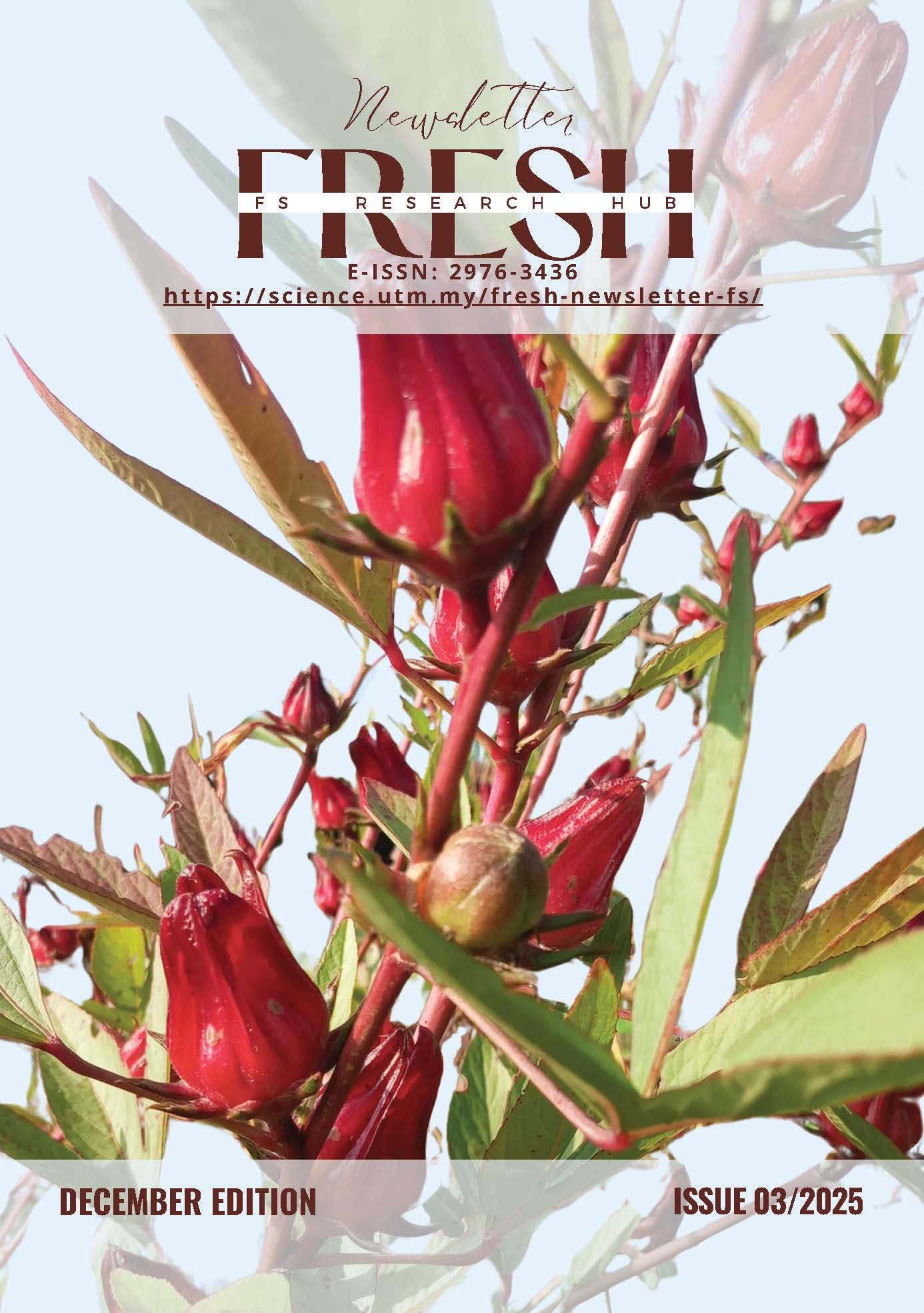
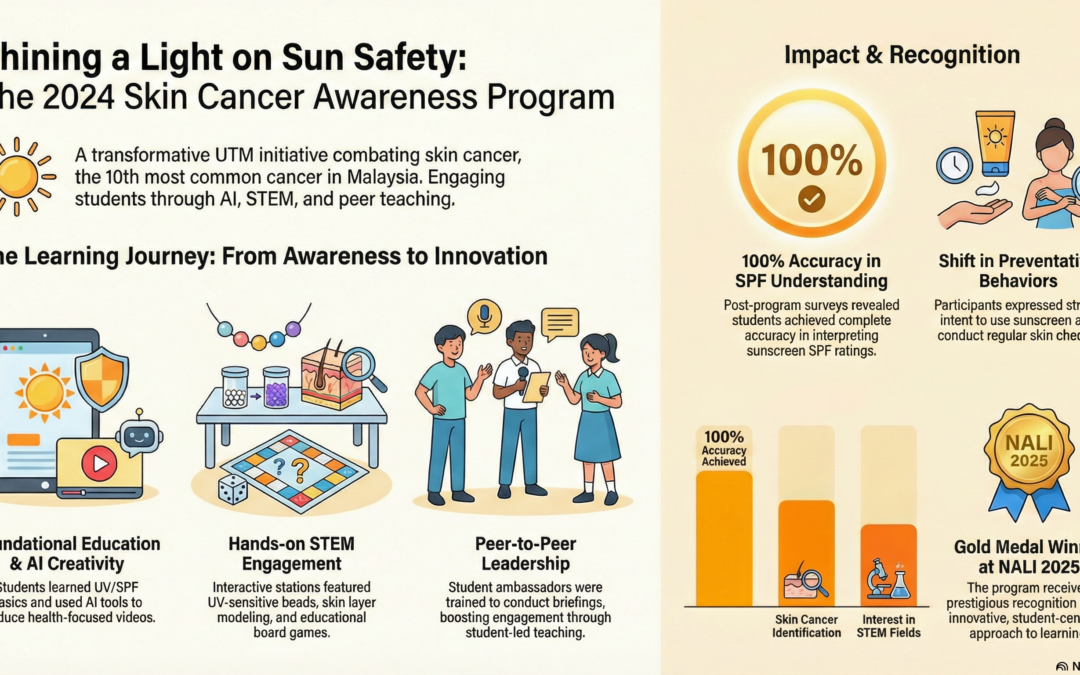
The program unfolded in several phases beginning with an introductory awareness session conducted by CAID researchers. A baseline survey revealed generally low initial knowledge, especially concerning the prevalence of skin cancer in Malaysia and the correct interpretation of sunscreen labels. This initial session not only established foundational understanding but also prepared students for the creative activities that followed. Afterward, the students were introduced to fundamental concepts such as the types of skin cancer, UV radiation, the role of SPF in sunscreen, and the importance of early self-examination (Figure 1).
A signature component of the project was the creative awareness video competition, which incorporated the use of AI tools for content development. Twenty students from SMK Damai Jaya participated in the SMK Damai Jaya category for the video competition, where they received guidance on video production, storyboarding, and effective communication strategies. They were also taught to use AI-based tools to enhance their videos, helping them generate visuals, captions, and creative elements that aligned with their messages. Their task was to produce short videos addressing skin cancer prevention and sun-safety practices. To extend the program’s impact beyond a single school, four selected students were trained as taskforce ambassadors. These students later conducted online awareness briefings for SMK Mutiara Rini and SMK Sultan Ismail, demonstrating leadership, scientific communication, and peer-to-peer teaching an approach that significantly boosted engagement and retention among their audiences.
Dr. Farah Hanis Juhari is a member of Cancer and Infectious Diseases (CAID) and a Senior Lecturer in the Department of Biosciences, Faculty of Science, UTM.
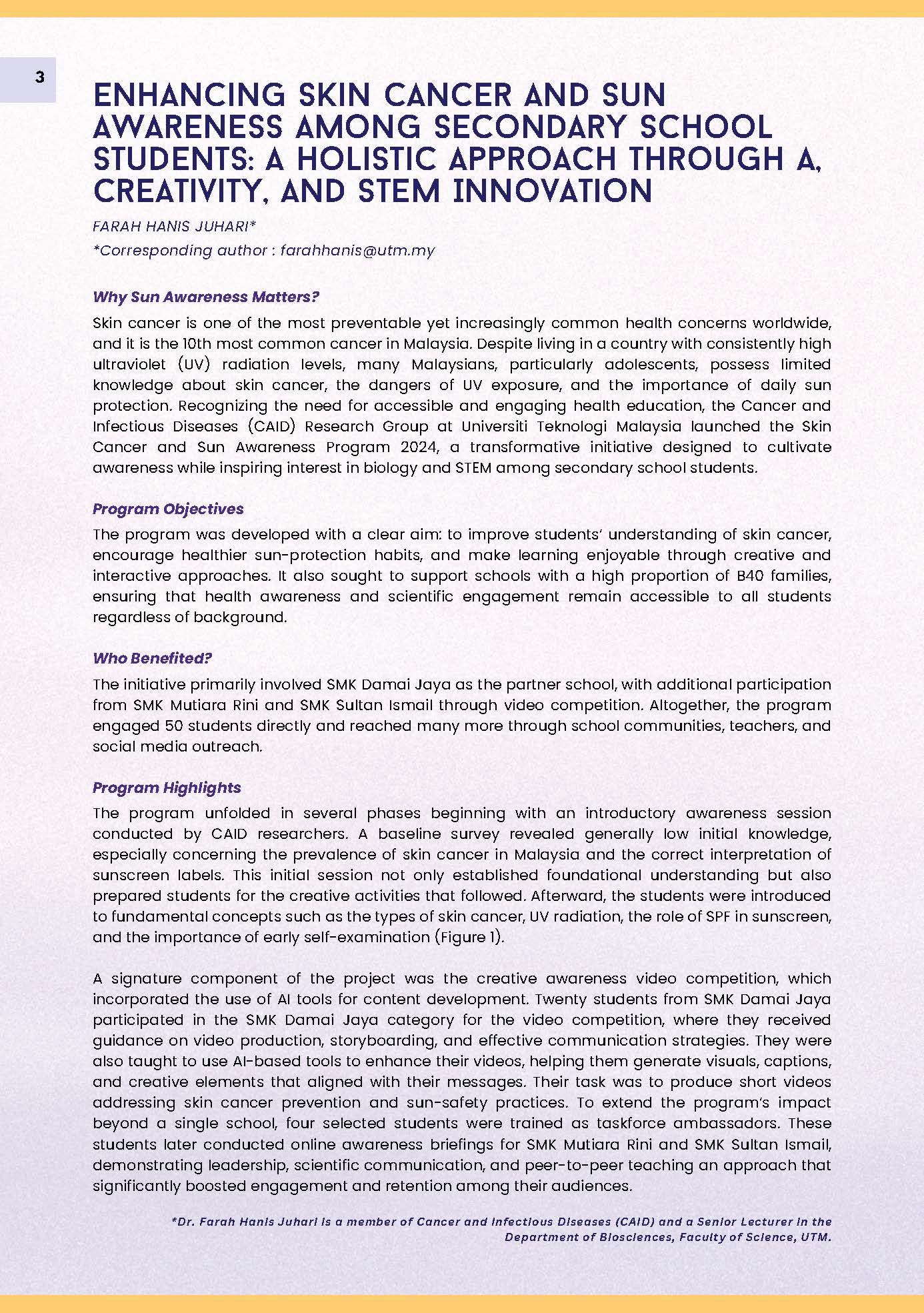
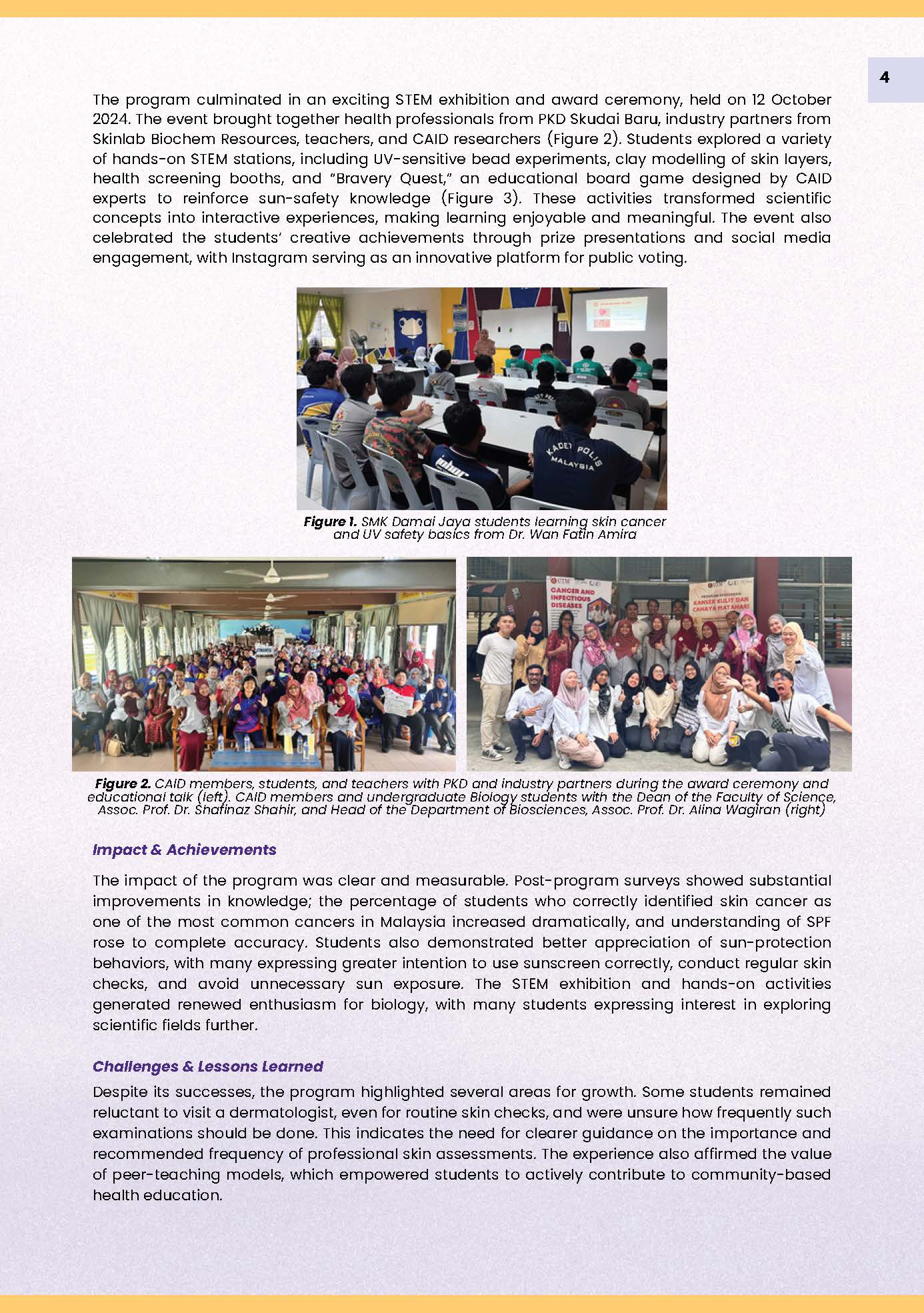
The program culminated in an exciting STEM exhibition and award ceremony, held on 12 October 2024. The event brought together health professionals from PKD Skudai Baru, industry partners from Skinlab Biochem Resources, teachers, and CAID researchers (Figure 2). Students explored a variety of hands-on STEM stations, including UV-sensitive bead experiments, clay modelling of skin layers, health screening booths, and “Bravery Quest,” an educational board game designed by CAID experts to reinforce sun-safety knowledge (Figure 3). These activities transformed scientific concepts into interactive experiences, making learning enjoyable and meaningful. The event also celebrated the students’ creative achievements through prize presentations and social media engagement, with Instagram serving as an innovative platform for public voting.
Figure 1. SMK Damai Jaya students learning skin cancer and UV safety basics from Dr. Wan Fatin Amira
Figure 2. CAID members, students, and teachers with PKD and industry partners during the award ceremony and educational talk (left). CAID members and undergraduate Biology students with the Dean of the Faculty of Science, Assoc. Prof. Dr. Shafinaz Shahir, and Head of the Department of Biosciences, Assoc. Prof. Dr. Aina Wajiran (right)
Impact & Achievements
The impact of the program was clear and measurable. Post-program surveys showed substantial improvements in knowledge; the percentage of students who correctly identified skin cancer as one of the most common cancers in Malaysia increased dramatically, and understanding of SPF rose to complete accuracy. Students also demonstrated better appreciation of sun-protection behaviors, with many expressing greater intention to use sunscreen correctly, conduct regular skin checks, and avoid unnecessary sun exposure. The STEM exhibition and hands-on activities generated renewed enthusiasm for biology, with many students expressing interest in exploring scientific fields further.
Challenges & Lessons Learned
Despite its successes, the program highlighted several areas for growth. Some students remained reluctant to visit a dermatologist, even for routine skin checks, and were unsure how frequently such examinations should be done. This indicates the need for clearer guidance on the importance and recommended frequency of professional skin assessments. The experience also affirmed the value of peer-teaching models, which empowered students to actively contribute to community-based health education.
Figure 3. Interactive STEM stations, UV beads, clay skin layers, infographics, and the CAID ‘Bravery Quest’ game helped students strengthen their sun-safety understanding
Award Recognition: Winner of NALI 2025
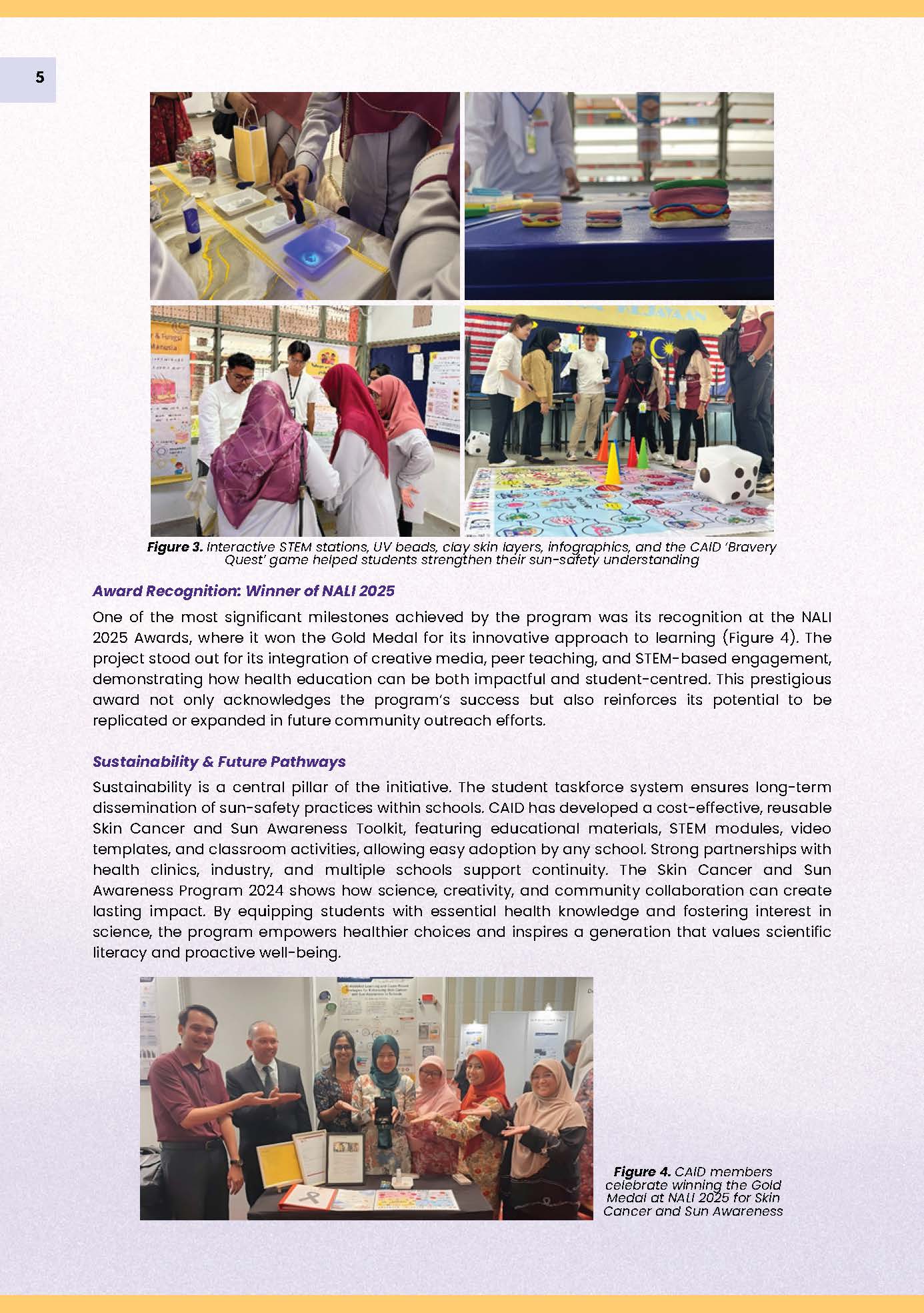
One of the most significant milestones achieved by the program was its recognition at the NALI 2025 Awards, where it won the Gold Medal for its innovative approach to learning (Figure 4). The project stood out for its integration of creative media, peer teaching, and STEM-based engagement, demonstrating how health education can be both impactful and student-centred. This prestigious award not only acknowledges the program’s success but also reinforces its potential to be replicated or expanded in future community outreach efforts.
Sustainability & Future Pathways
Sustainability is a central pillar of the initiative. The student taskforce system ensures long-term dissemination of sun-safety practices within schools. CAID has developed a cost-effective, reusable Skin Cancer and Sun Awareness Toolkit, featuring educational materials, STEM modules, video templates, and classroom activities, allowing easy adoption by any school. Strong partnerships with health clinics, industry, and multiple schools support continuity. The Skin Cancer and Sun Awareness Program 2024 shows how science, creativity, and community collaboration can create lasting impact. By equipping students with essential health knowledge and fostering interest in science, the program empowers healthier choices and inspires a generation that values scientific literacy and proactive well-being.
Figure 4. CAID members celebrate winning the Gold Medal at NALI 2025 for Skin Cancer and Sun Awareness