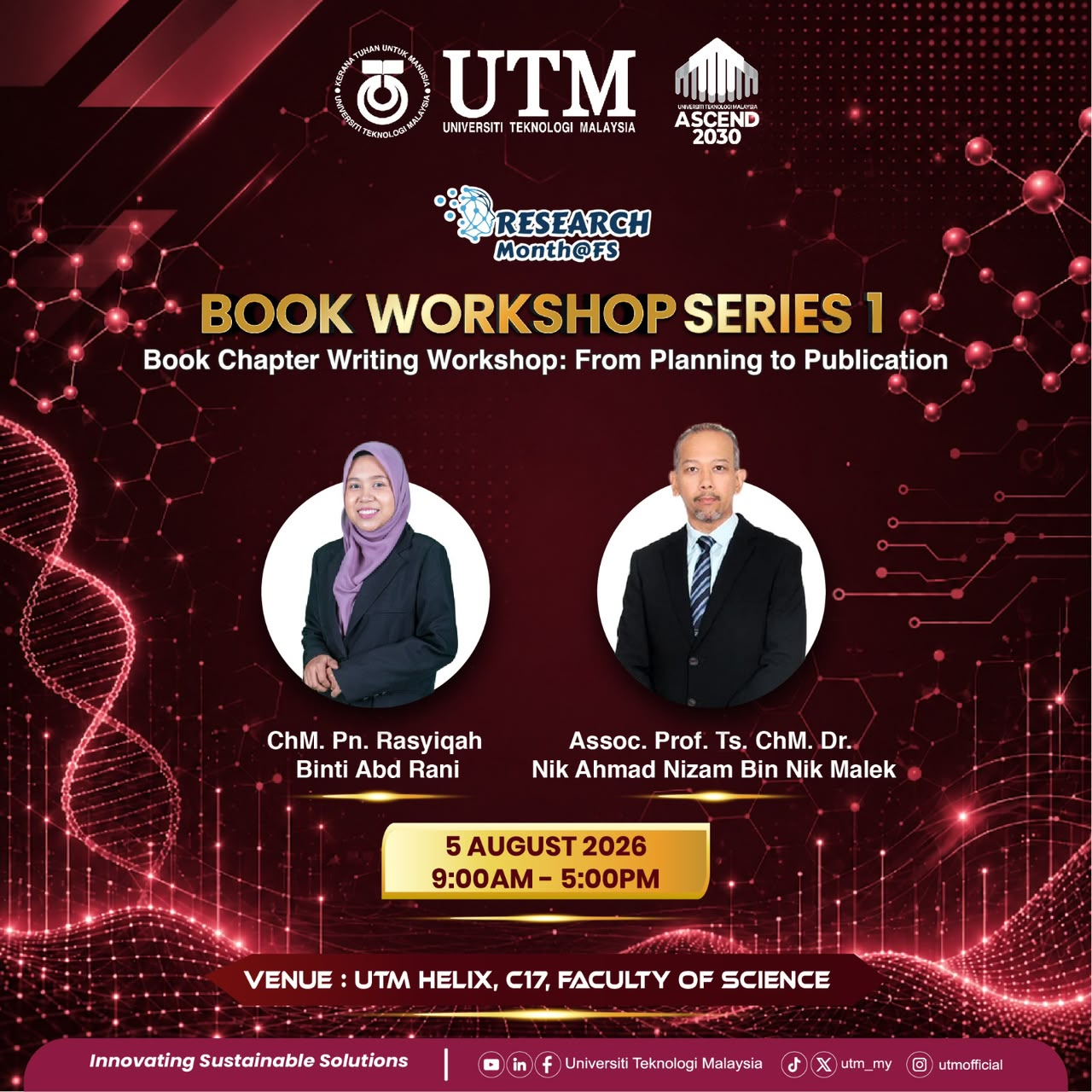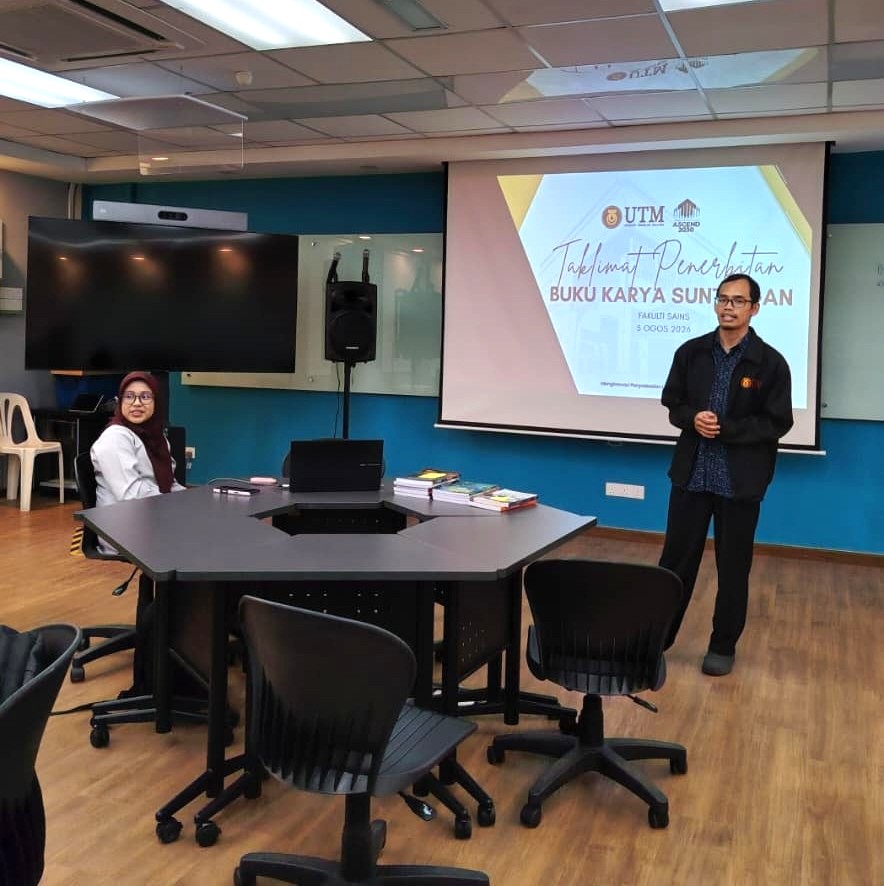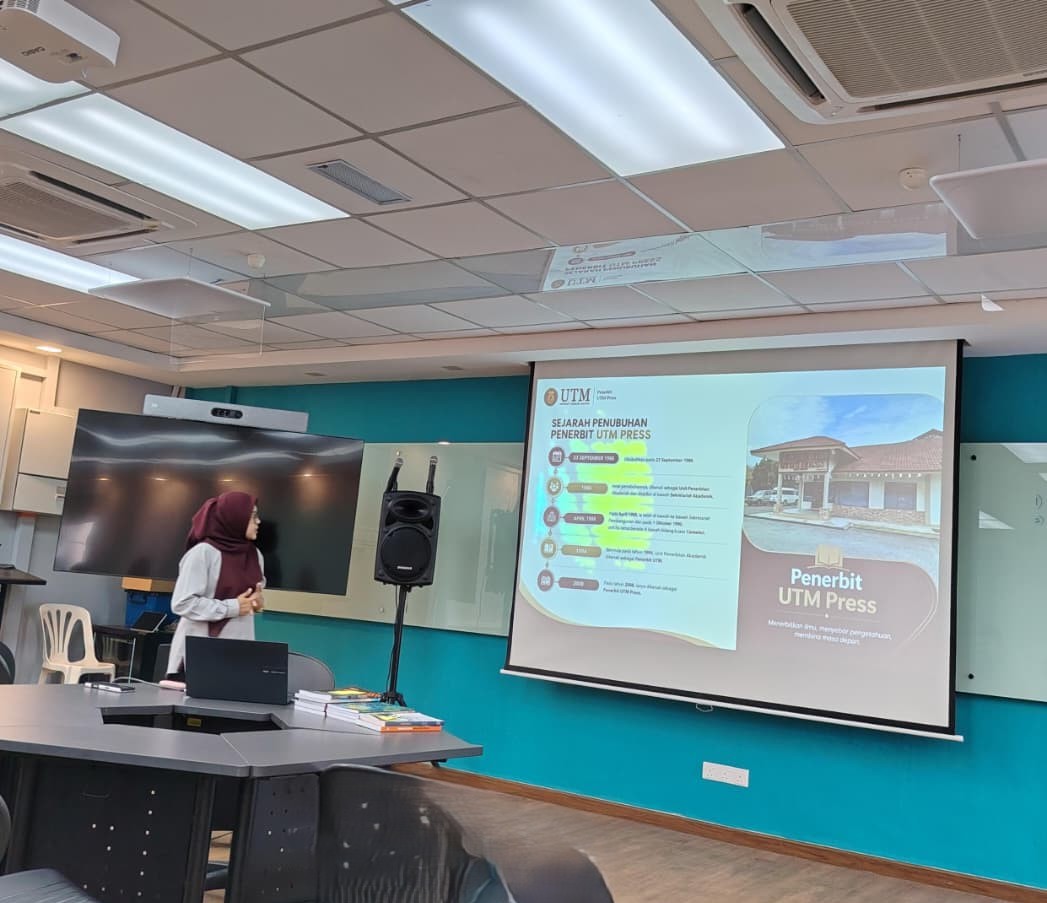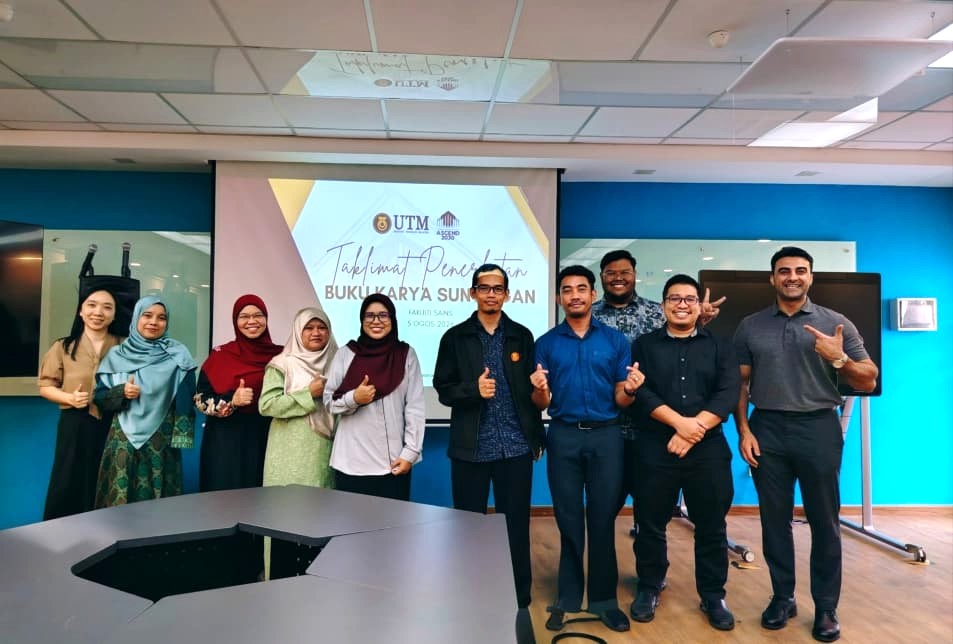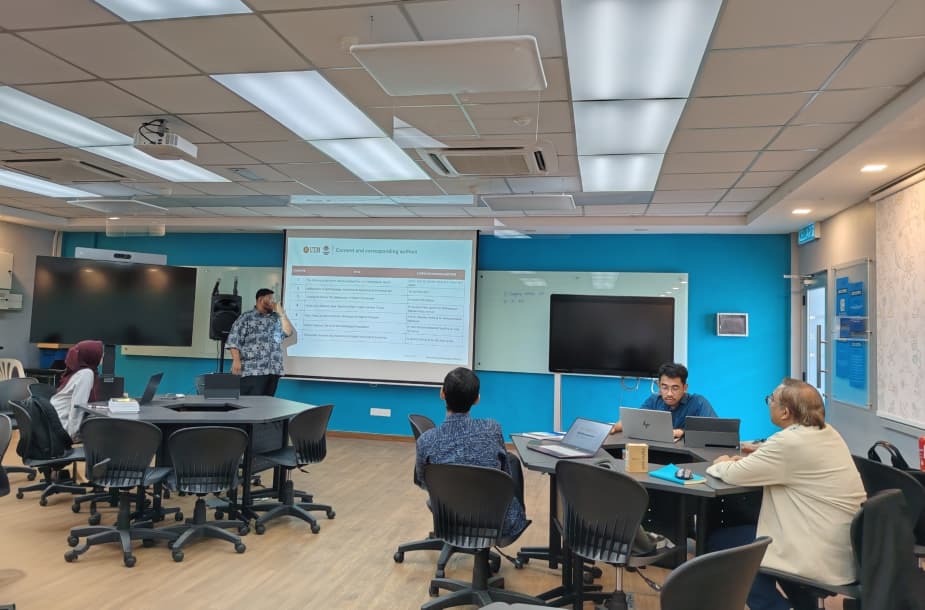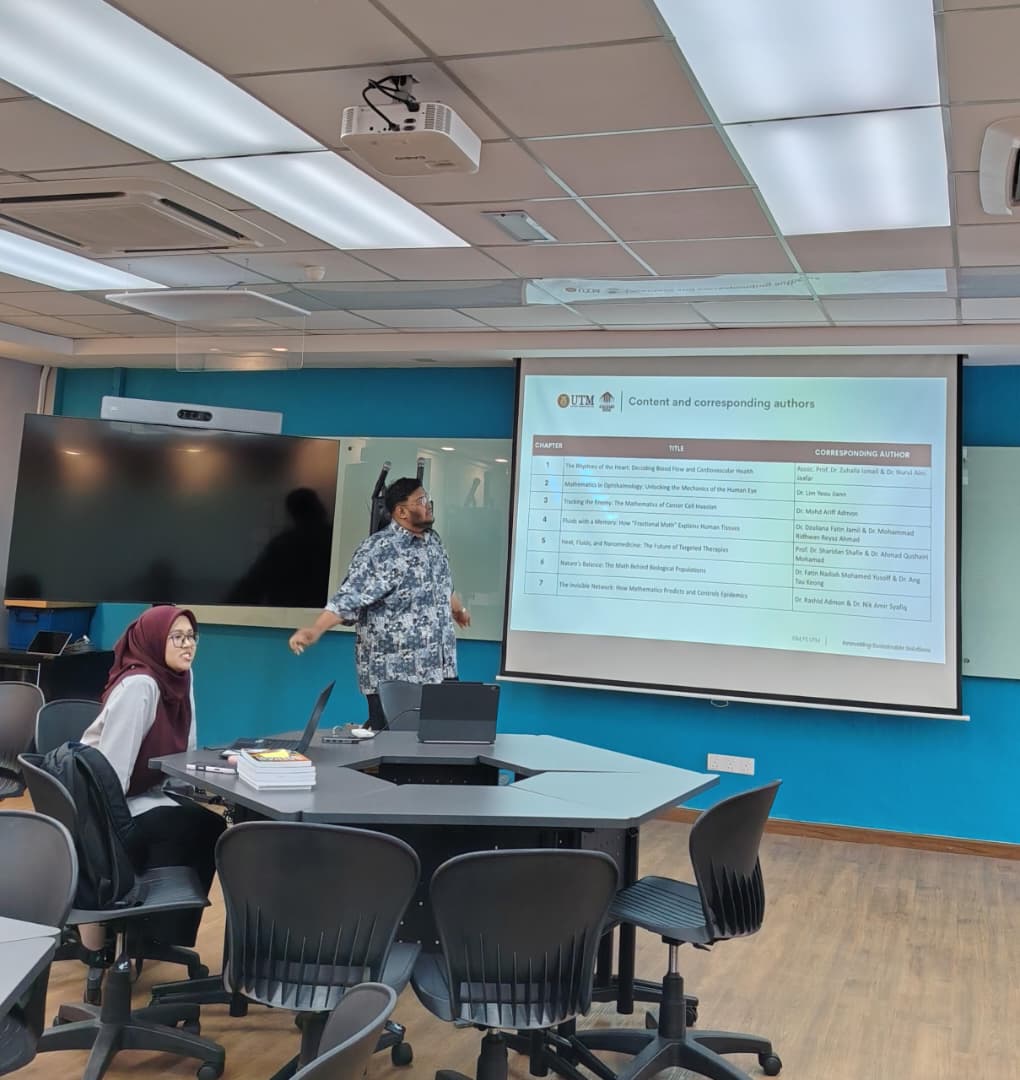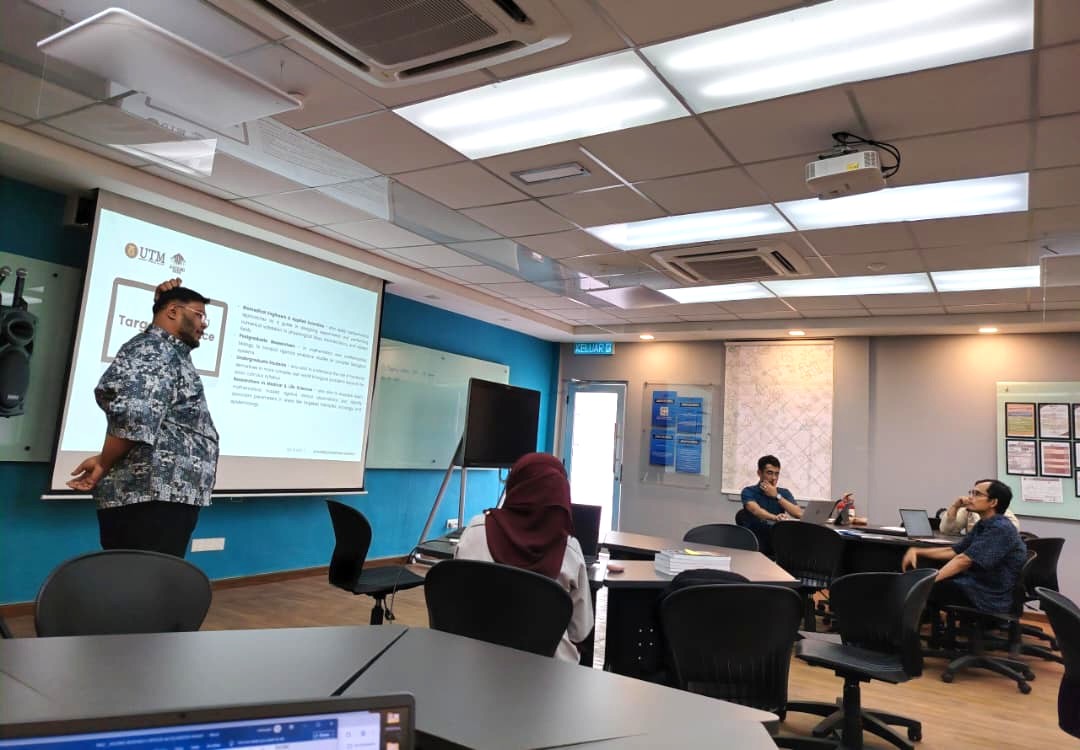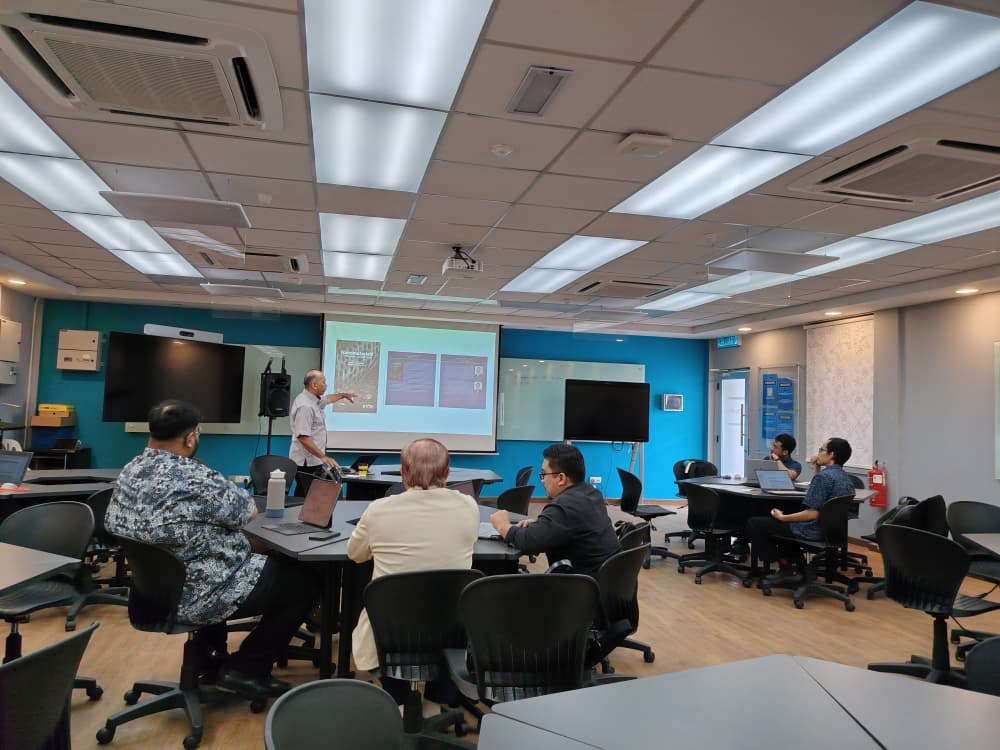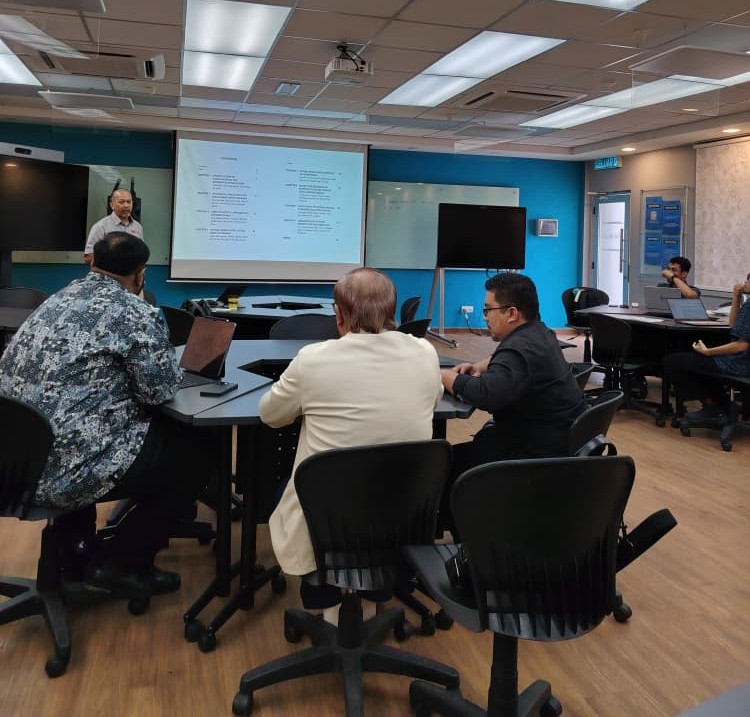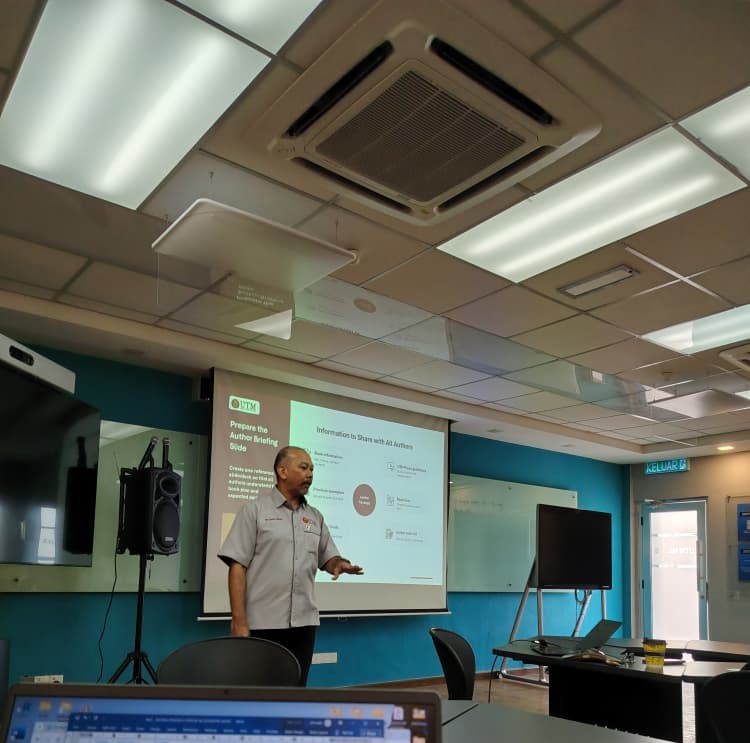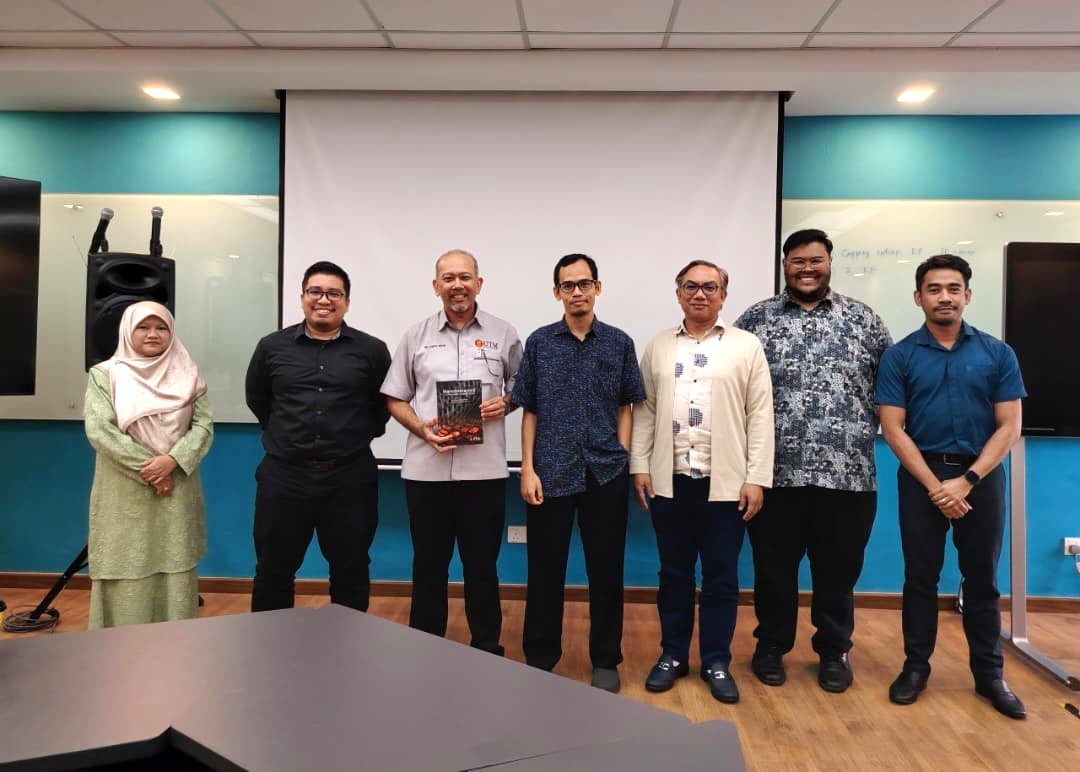
JOHOR BAHRU, 5 August 2026 – The Faculty of Science, Universiti Teknologi Malaysia (UTM), organised Book Workshop Series 1: Book Chapter Writing Workshop – From Planning to Publication as part of Research Month @FS 2026. The full-day programme was conducted from 9.00 a.m. to 5.00 p.m. and featured ChM. Pn. Rasyiqah Binti Abd Rani and Assoc. Prof. Ts. ChM. Dr. Nik Ahmad Nizam Bin Nik Malek as speakers.
The workshop provided academic staff with practical guidance on planning, preparing, editing and submitting book chapters and edited-book manuscripts. It also introduced participants to the publication requirements, editorial standards and workflow adopted by Penerbit UTM Press.
During the first part of the programme, ChM. Pn. Rasyiqah explained that an edited book comprises chapters written by different authors but connected through a clearly defined central theme. The editor is responsible for selecting contributors, monitoring the writing process, reviewing the chapters and ensuring that the overall manuscript remains coherent and consistent.
Participants were introduced to several important publication requirements. An edited book should contain at least six chapters and a minimum of 100 full-text pages, while each chapter should comply with the prescribed structure and formatting requirements. The similarity index for each chapter should not exceed 20%, and the editor is responsible for checking the manuscript through Turnitin before submission.
The session also covered the essential components of an edited book, including the preliminary pages, main chapters and end matter. Participants received guidance on preparing the title page, copyright page, contents, preface, chapter structure, references, index and promotional blurb. Attention was also given to producing concise and specific book and chapter titles that accurately represent the scope of the publication.
Assoc. Prof. Ts. ChM. Dr. Nik Ahmad Nizam shared a practical editorial workflow based on his experience in developing and managing edited-book projects. He highlighted five central responsibilities of an editor: designing the book content, briefing contributors, monitoring progress, reviewing chapters and preparing the completed manuscript for submission.
He emphasised that the planning stage should begin by matching each contributor’s expertise with an appropriate writing scope. Editors should then establish the overall theme, propose chapter titles, define the boundaries of each chapter and arrange the chapters in a logical sequence to prevent repetition and ensure continuity throughout the book.
A clear author briefing package was recommended to communicate the book’s objectives, target readers, chapter sequence, formatting requirements, deadlines and expected deliverables. Editors were also encouraged to monitor contributors regularly, perform an internal review before external evaluation and maintain consistency in headings, figures, tables, page organisation and references.
The workshop used Nanomaterials for Biomedical Application as one of the practical examples of developing an edited book. The project brought together contributors from UTM and Asia Metropolitan University to produce chapters covering biomedical nanomaterials, sustainable materials, toxicology, cancer treatment, antibacterial applications, regulation and future directions in nanomedicine.
Participants were also advised to make chapters more accessible and engaging by incorporating suitable tables, original illustrations, photographs, flow diagrams and schematic representations. Contributors were reminded to follow the required template, maintain consistent reference formatting and avoid reusing illustrations from external sources without proper permission.
Through Book Workshop Series 1, the Faculty of Science continues to support academic staff in transforming their knowledge, research experience and collaborative expertise into structured scholarly publications. The programme is expected to encourage the development of more high-quality edited books that can serve as valuable references for researchers, students, professionals and the wider community.
#FSResearchMonth2026
#utmfsresearch