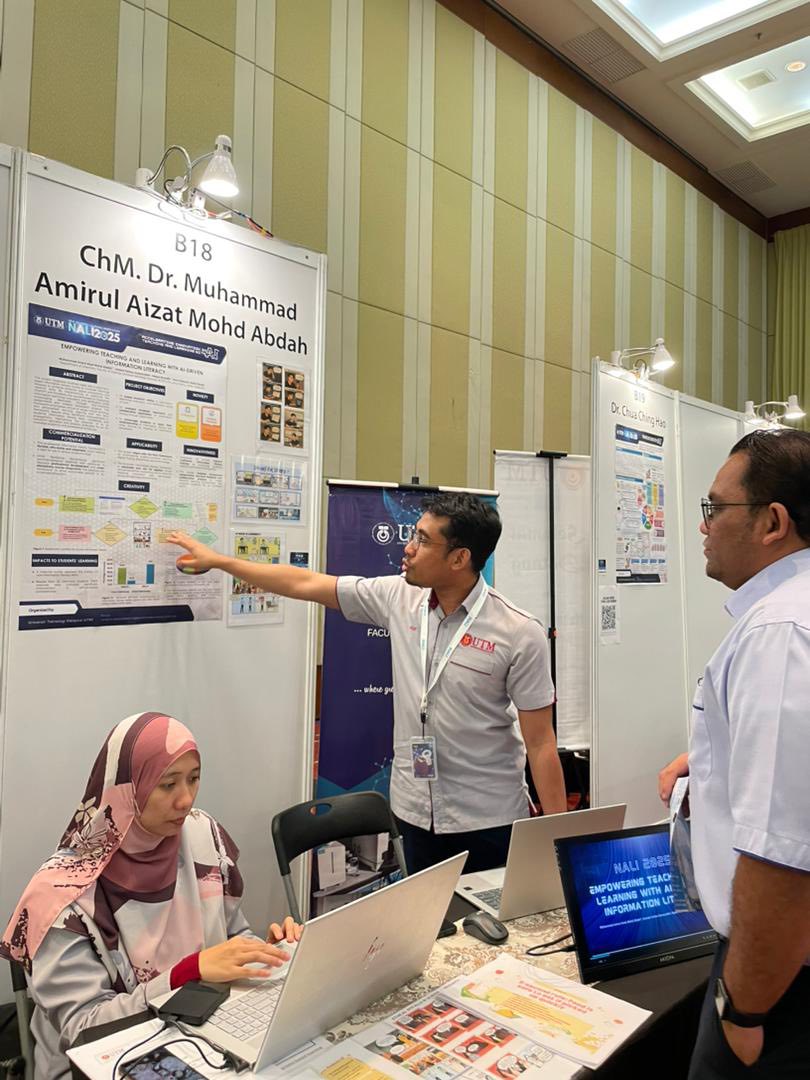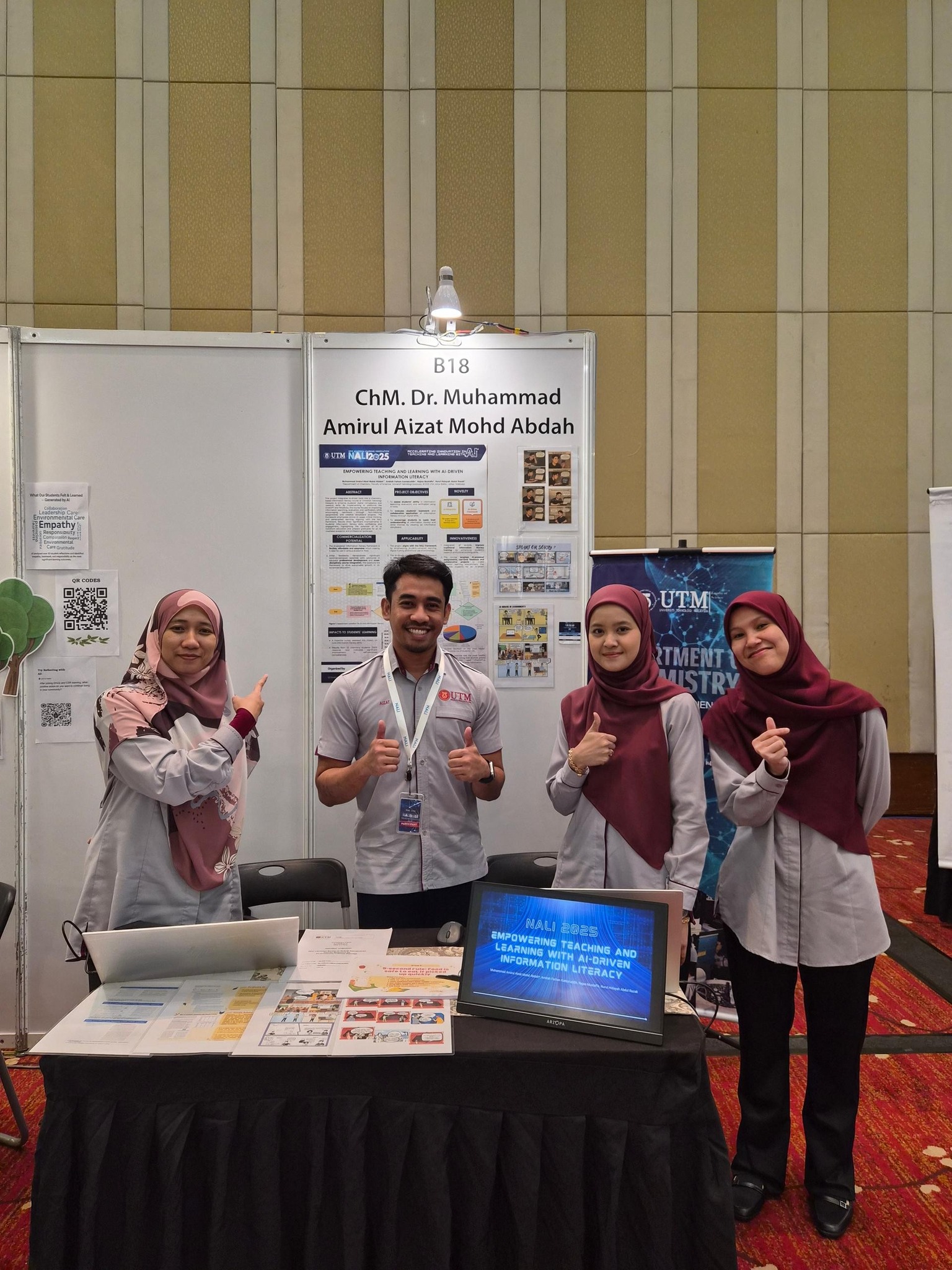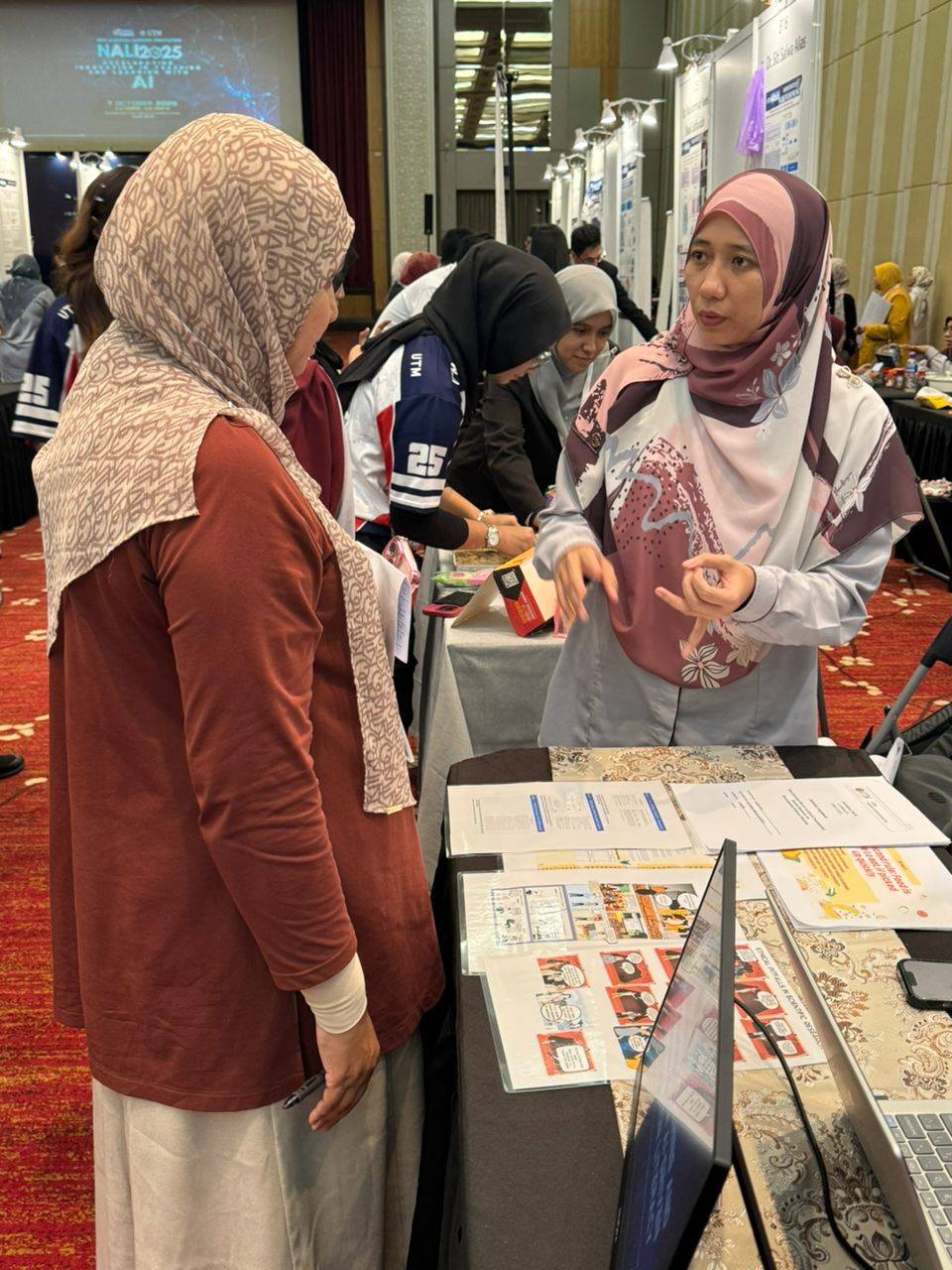
The integration of Artificial Intelligence (AI) into higher education continues to redefine how students learn, think, and engage with information. At Universiti Teknologi Malaysia (UTM), a pioneering project led by Dr. Muhammad Amirul Aizat Mohd Abdah from the Department of Chemistry, Faculty of Science, has taken a significant step forward by embedding AI into the Information Literacy course to enhance digital competency, research capability, and ethical awareness among science undergraduates
Reimagining Information Literacy in the Age of AI
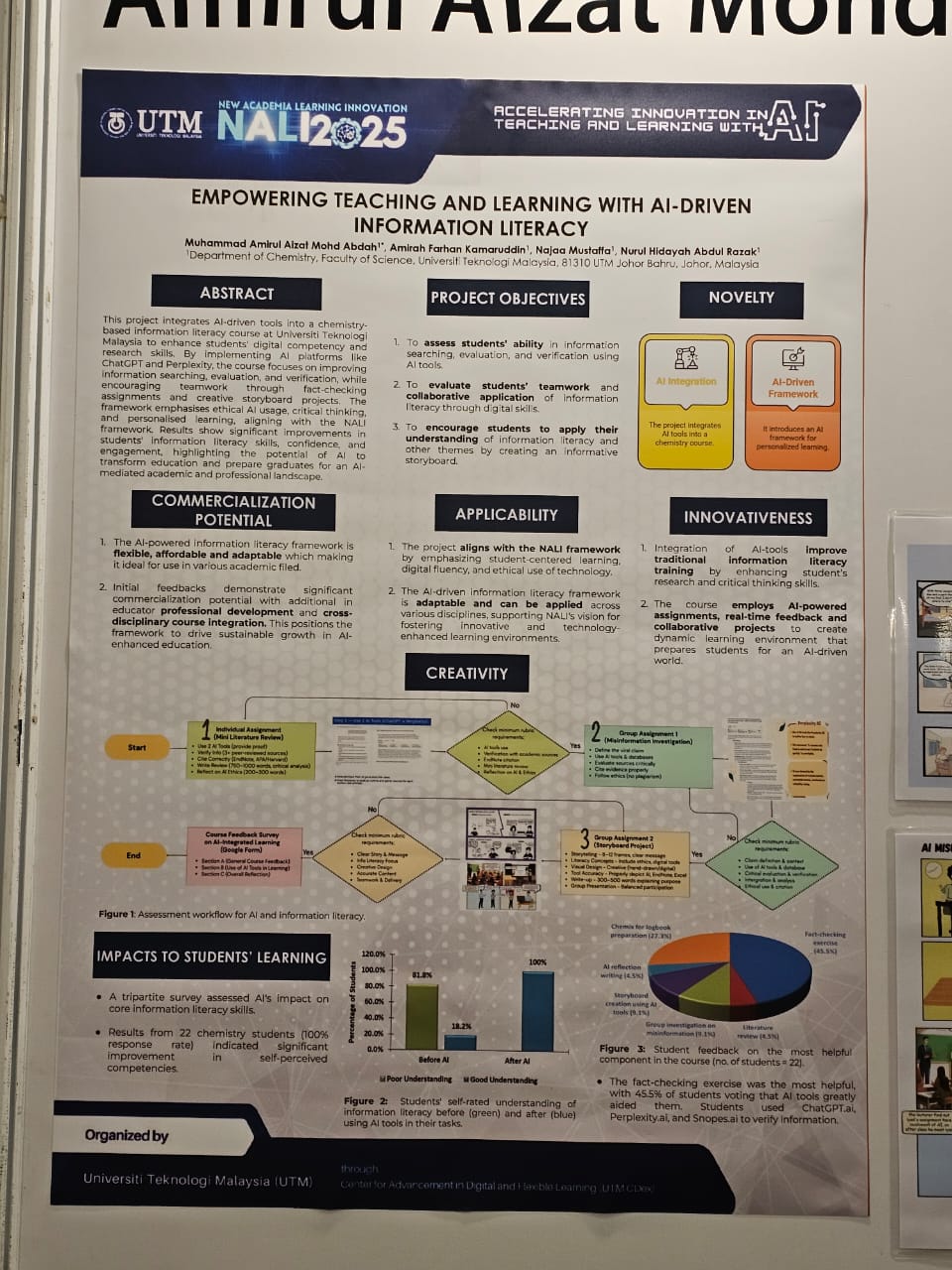
The project, titled “Empowering Teaching and Learning with AI-Driven Information Literacy,” introduces AI platforms such as ChatGPT, Perplexity, and Copilot as personalized learning partners within chemistry-based coursework. These tools are not merely supplementary but serve as interactive assistants that help students search, evaluate, and verify information effectively while promoting critical thinking, digital fluency, and ethical AI use.
“In an era overflowing with information, the ability to discern credible sources and apply ethical judgment is as crucial as mastering scientific knowledge,” said Dr. Amirul.
Through AI-supported assignments, students learn to fact-check digital content, evaluate scientific claims, and communicate findings creatively via storyboard projects and multimedia presentations. This structured and reflective approach supports the New Academia Learning Innovation (NALI) framework by blending student-centered, assignment-based, and technology-enhanced learning.
Structured Learning Through AI
The course employs a three-tiered learning model — beginner, intermediate, and competence — to gradually build mastery in AI-assisted information literacy:
- Individual Level (Beginner): Students use AI for literature reviews, prompt refinement, and ethical reflection in academic research.
- Group Level 1 (Intermediate): Teams conduct AI-assisted fact-checking of viral scientific claims, applying triangulation and data verification through platforms like Perplexity.ai and Google Scholar.
- Group Level 2 (Competence): Students design digital storyboards on topics such as “AI Misuse in Assignments” or “Ethics in Scientific Research,” merging creativity with digital literacy using Canva AI and Google Slides.
This progressive framework ensures students don’t just learn about AI — they learn through AI, developing the ability to question, analyze, and ethically utilize emerging technologies in scientific contexts
Key Findings and Educational Impact
A survey conducted among 22 chemistry students revealed significant improvements in digital and information literacy skills after the AI integration:
- 100% found AI tools helpful in completing coursework efficiently.
- 93% reported improved understanding of information searching and verification.
- 95.5% expressed high satisfaction with the AI-integrated learning approach.
- Over 90% demonstrated ethical confidence in using AI for academic tasks.
The most helpful learning components identified were AI-based fact-checking, group investigation on misinformation, and creative storyboard development. Students emphasized how AI tools made learning more interactive, time-efficient, and contextually relevant compared to traditional search methods
“AI helped me focus more on understanding concepts rather than spending time gathering information,” shared one participant in the post-course survey.
The findings clearly demonstrate that structured AI integration not only enhances information literacy but also builds students’ confidence and independence in managing academic research in a digital environment.
Towards a Future-Ready Education Model
Beyond the classroom, this AI-driven framework holds strong potential for replication across disciplines — from STEM to the humanities — and can be adapted for professional training and lifelong learning. The model’s flexibility, cost-effectiveness, and focus on ethical AI use make it a sustainable tool for preparing graduates for an AI-mediated academic and professional landscape.
“AI should not replace human thinking — it should expand it,” emphasized Dr. Amirul, reflecting the project’s core philosophy of cultivating critical, ethical, and creative thinkers for the digital era.
📍 Project Title: Empowering Teaching and Learning with AI-Driven Information Literacy
👨🏫 Principal Investigator: Dr. Muhammad Amirul Aizat Mohd Abdah, Department of Chemistry, Faculty of Science, UTM
📧 Contact: muhammadamirulaizat@utm.my
🔗 Discover more research and educational innovations at: https://science.utm.my/utmfsresearch/