Nik Ahmad Nizam Nik Malek* & Muhammad Hariz Asraf Hassan
*Corresponding author: niknizam@utm.my
By harnessing the power of nature and nanotechnology, researchers from the Faculty of Science and the Centre for Sustainable Nanomaterials (CSNano) at Universiti Teknologi Malaysia (UTM) have made a significant advancement in developing eco-friendly, effective, and scalable antibacterial solutions. The biosynthesis of silver nanoparticles (AgNPs) using Persicaria odorata (kesum) leaf extract not only provides a green alternative to traditional chemical synthesis but also opens up new possibilities for biomedical applications, particularly in wound healing and infection control.
The Challenge
Antibiotic Resistance and Chemical Hazards
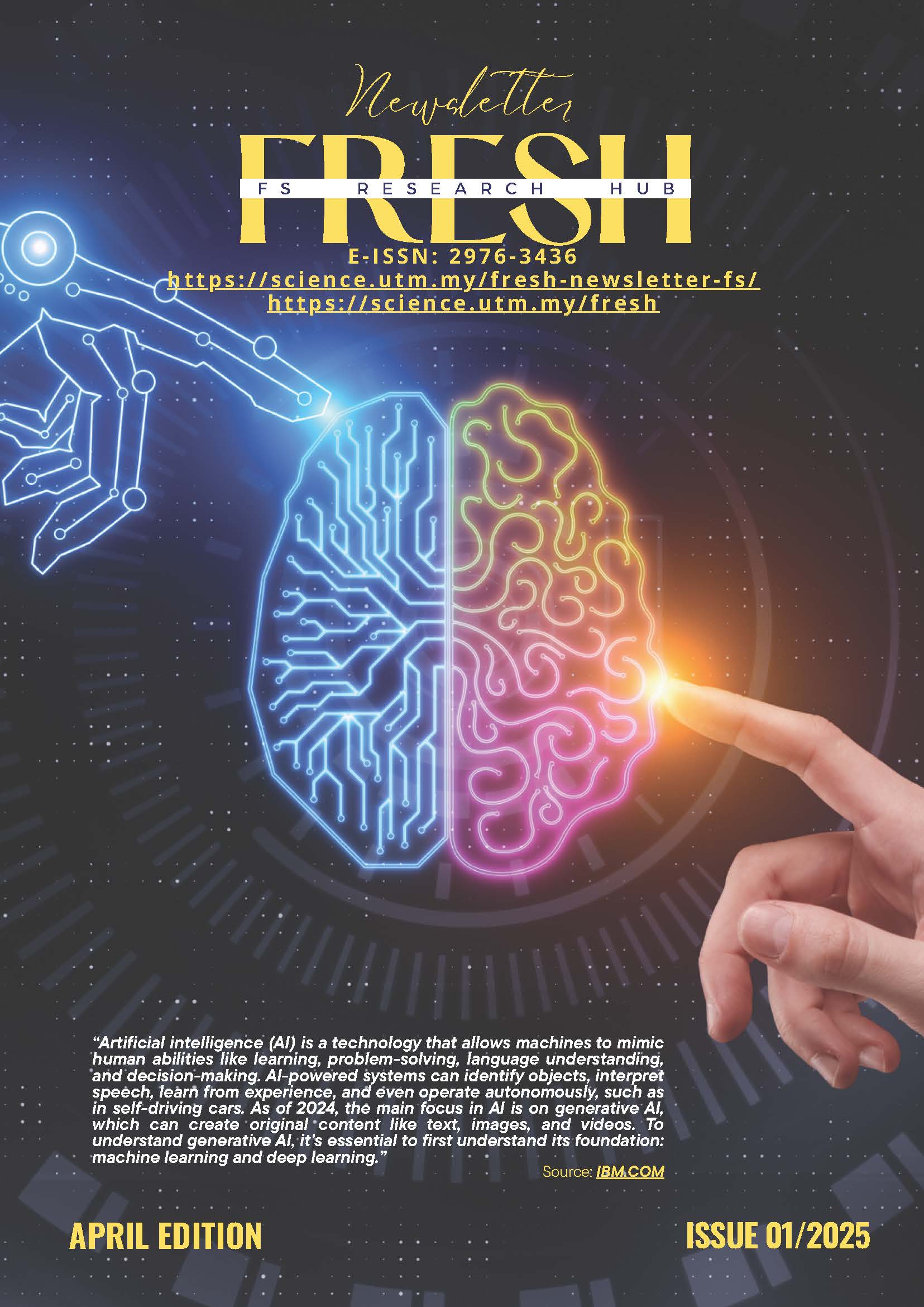
The global rise in antibiotic-resistant bacteria, exacerbated by the overuse of synthetic drugs and a lack of innovation in new antibiotics, calls for alternative antimicrobial strategies. Conventional chemical and physical methods for synthesizing nanoparticles often require toxic reagents and high-energy inputs, raising concerns about environmental impact and biological safety. In contrast, green synthesis employs naturally occurring plant metabolites to reduce and stabilize metal ions, resulting in the formation of nanoparticles through an eco-friendly, one-pot process. Plants like P. odorata (kesum), rich in flavonoids and phenolics, are excellent candidates due to their medicinal properties and reducing capacity.
Long-Term Steroid Use
Steroid creams have been used for a long time to treat stubborn skin conditions such as eczema, acne, and psoriasis. However, prolonged use can lead to thinning of the skin, hormonal disruption, and increased sensitivity. But what if there was a gentler, smarter way to soothe your skin—something that works with your body and is free of steroids?
Breakthrough in Green Nanotechnology
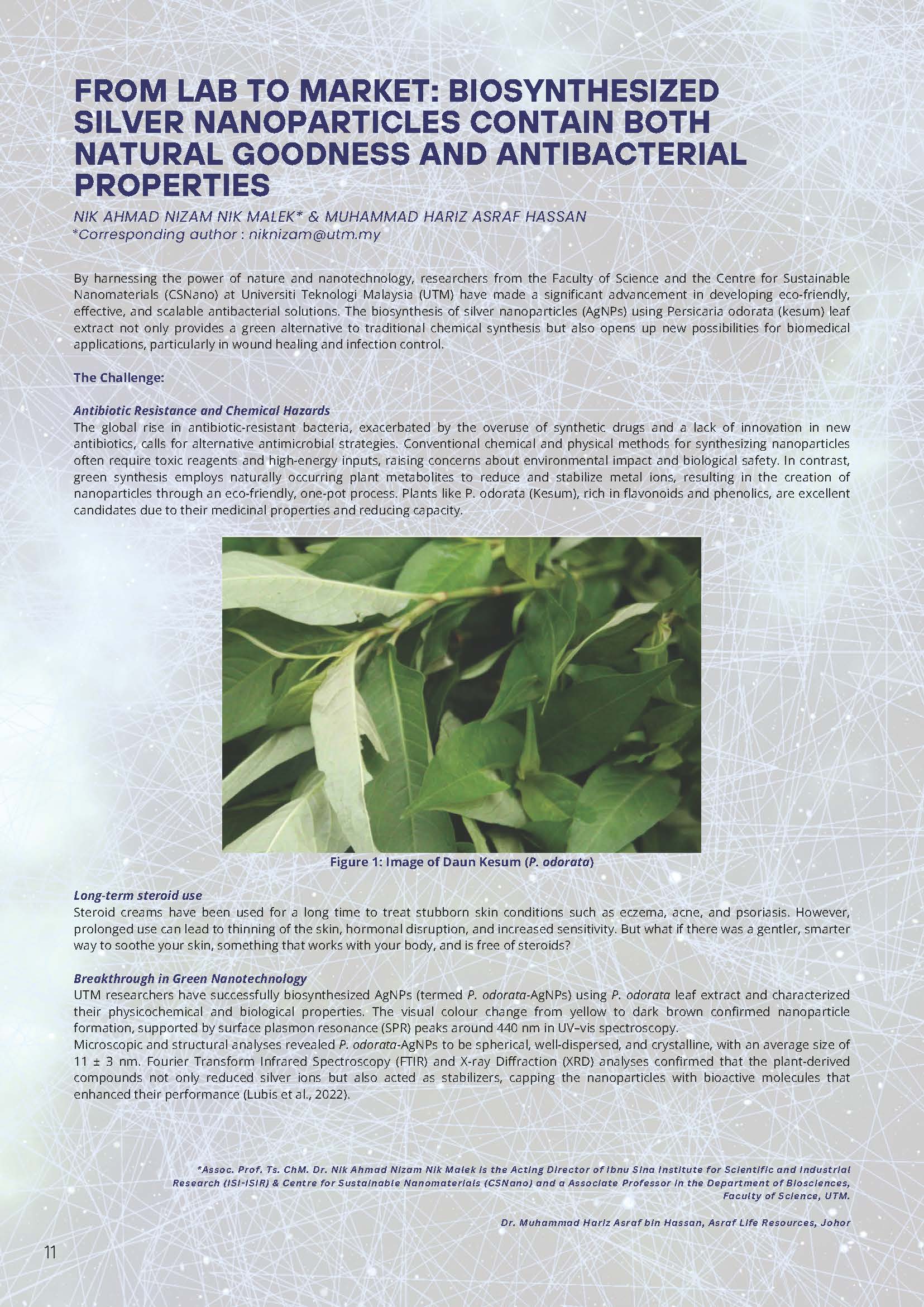
UTM researchers have successfully biosynthesized AgNPs (termed P. odorata-AgNPs) using P. odorata leaf extract and characterized their physicochemical and biological properties. The visual colour change from yellow to dark brown confirmed nanoparticle formation, supported by surface plasmon resonance (SPR) peaks around 440 nm in UV–vis spectroscopy. Microscopic and structural analyses revealed P. odorata-AgNPs to be spherical, well-dispersed, and crystalline, with an average size of 11 ± 3 nm. Fourier Transform Infrared Spectroscopy (FTIR) and X-ray Diffraction (XRD) analyses confirmed that the plant-derived compounds not only reduced silver ions but also acted as stabilizers, capping the nanoparticles with bioactive molecules that enhanced their performance (Lubis et al., 2022).
Proven Antibacterial Potency
A key finding from the team’s study (Lubis et al., 2022) was the dose-dependent antibacterial activity of P. odorata-AgNPs against Staphylococcus epidermidis and Methicillin-resistant Staphylococcus aureus (MRSA). Using standard disc diffusion, minimum inhibitory concentration (MIC), and time-kill kinetics assays, the researchers demonstrated the strong bactericidal effects of P. odorata-AgNPs, particularly against S. epidermidis at an MIC of 62.5 µg/mL and MRSA at 125 µg/mL.
These nanoparticles disrupt bacterial cell walls, release Ag⁺ ions, and generate oxidative stress, ultimately killing the pathogens without inducing resistance. Their small size facilitates interaction with microbial membranes, and the plant-based surface coating contributes synergistically by employing natural antimicrobial compounds.
Biocompatibility and Wound Healing Potential
Safety is crucial when introducing new antimicrobial agents into medical applications. P. odorata-AgNPs demonstrated excellent biocompatibility with normal human fibroblast cells (HSF1184), as validated through cell viability and in vitro wound migration assays. Cells exposed to optimized concentrations of P. odorata-AgNPs maintained over 80% viability and showed enhanced migration, which is essential for wound healing. This dual functionality, which is antibacterial and regenerative, positions P. odorata-AgNPs as promising candidates for future therapeutic applications, including wound dressings, topical gels, and implant coatings.
Supporting Evidence from Parallel Studies
The research aligns with other UTM-led studies, including those by Asraf et al. (2024) and Atieya et al. (2024), which have confirmed the successful biosynthesis of AgNPs using various plant extracts. These studies highlighted the influence of phytochemical composition on nanoparticle size, shape, and antimicrobial efficacy. Through all trials, biosynthesized AgNPs outperformed their chemically synthesized counterparts concerning environmental safety and biological compatibility.
From Laboratory Innovation to Market Readiness
In response to the increasing demand for antibacterial solutions that are both effective and safe while being environmentally sustainable, this research project advances laboratory-scale innovation toward real-world application and pre-commercialization. Supported by the Prototype Development Fund (PDF2), the initiative represents a significant milestone in translating fundamental scientific discoveries into practical products. By harnessing the therapeutic potential of natural plant-based resources, particularly P. odorata, this project connects green nanotechnology with modern biomedical and skincare applications, providing promising alternatives to conventional antimicrobial agents that often carry toxicity and environmental risks.
Scientific Foundation Meets Real-World Needs
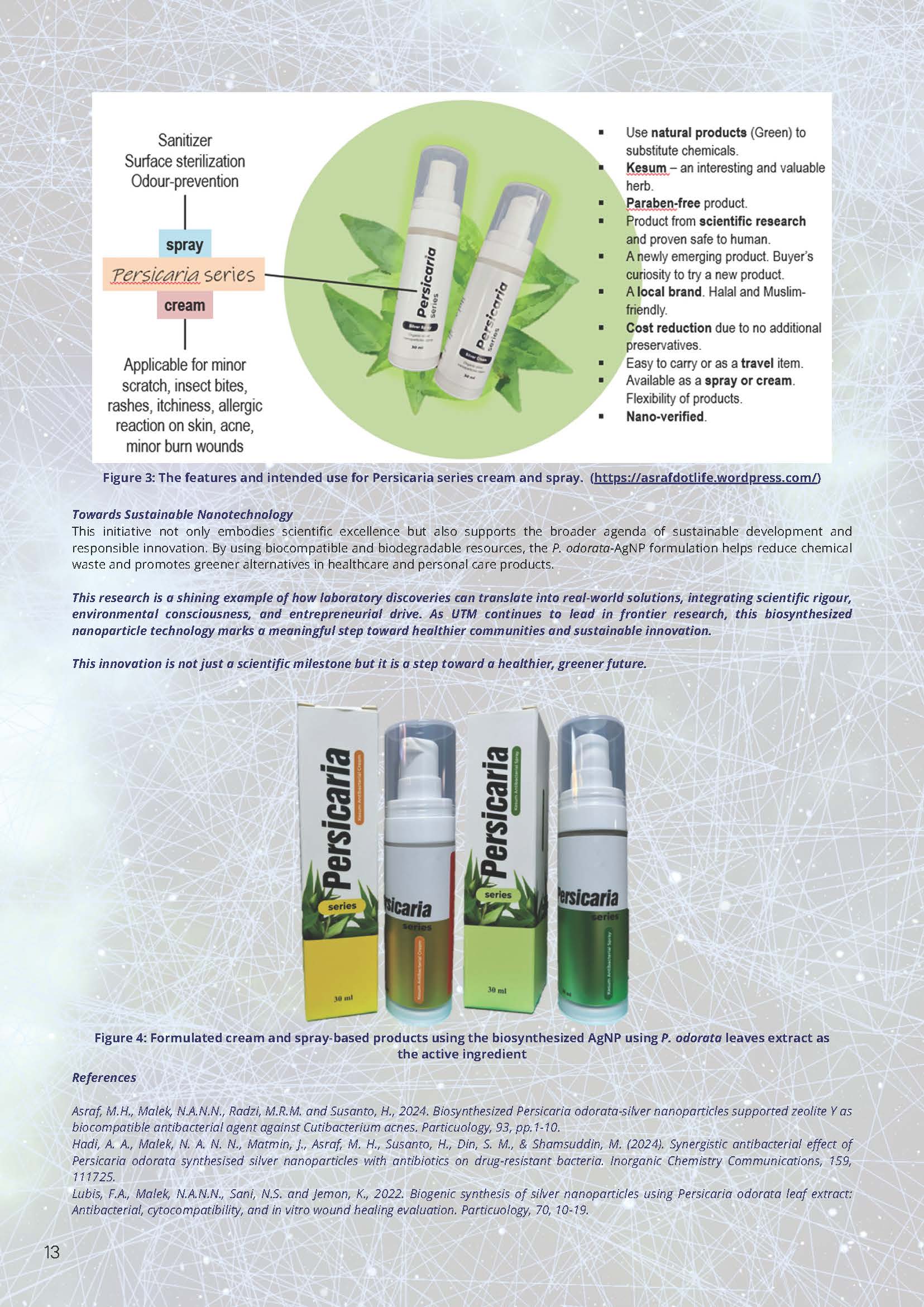
Lab-scale evaluations revealed that P. odorata-AgNP exhibits strong antibacterial activity, particularly against Escherichia coli, a Gram-negative bacterium. In vitro cytotoxicity testing using human skin fibroblast cells confirmed that the nanoparticles are safe at topical application levels, while in vivo skin irritation assessments on animal models reported no adverse effects, achieving a Primary Irritation Index (PII) of zero. To further advance the project toward market readiness, the team designed and fabricated a Good Manufacturing Practice (GMP)-compliant small-scale production system reactor for consistent production. Cost estimations indicated the potential to produce 10,000 units of 30 mL spray or cream per month at a competitive rate, thereby reinforcing the feasibility of commercialization.
Consumer-Centric Innovation and Impact
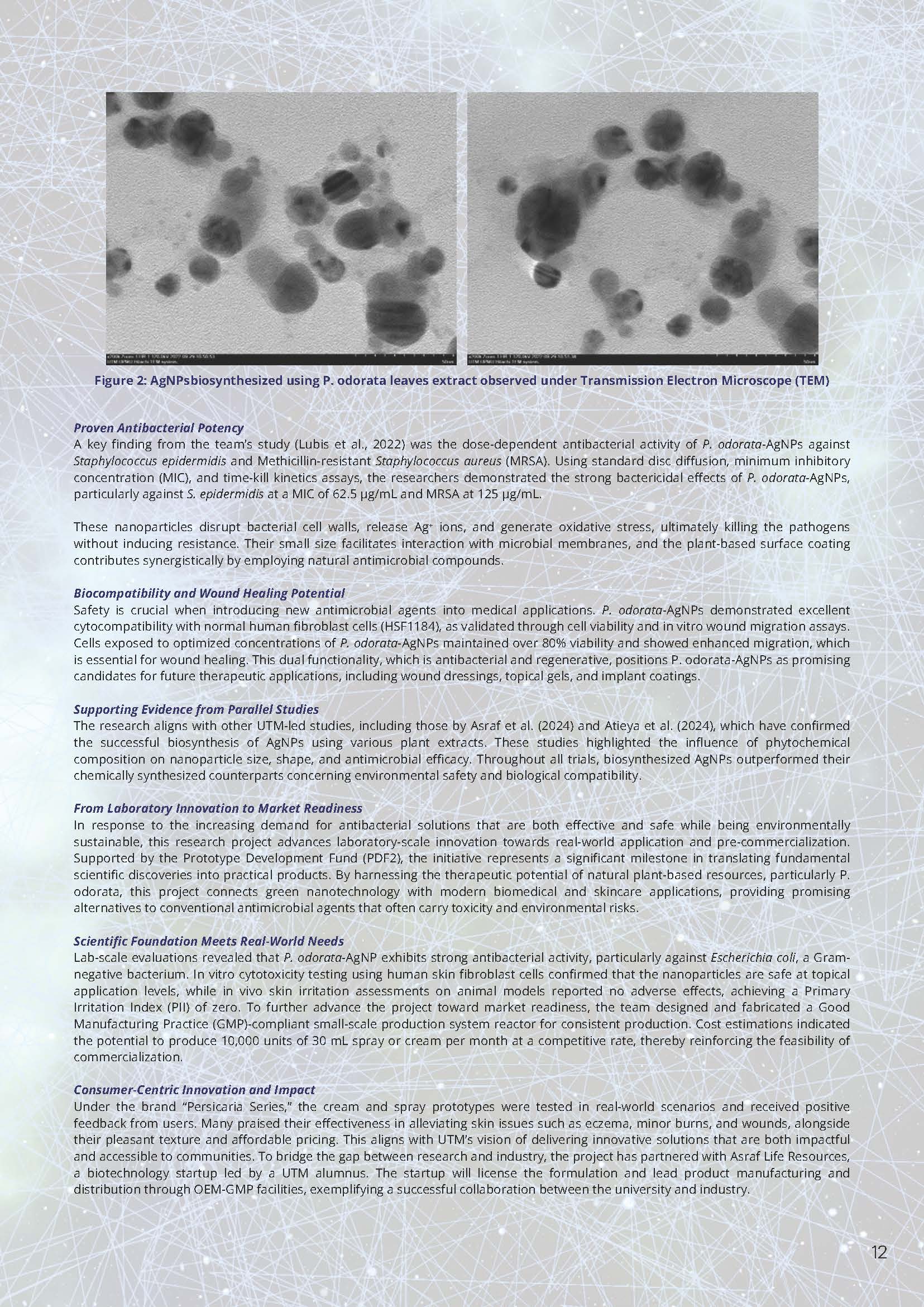
Under the brand “Persicaria Series,” the cream and spray prototypes were tested in real-world scenarios and received positive feedback from users. Many praised their effectiveness in alleviating skin issues such as eczema, minor burns, and wounds, alongside their pleasant texture and affordable pricing. This aligns with UTM’s vision of delivering innovative solutions that are both impactful and accessible to communities. To bridge the gap between research and industry, the project has partnered with Asraf Life Resources, a biotechnology startup led by a UTM alumnus. The startup will license the formulation and lead product manufacturing and distribution through OEM-GMP facilities, exemplifying a successful collaboration between the university and industry.
Towards Sustainable Nanotechnology
This initiative not only embodies scientific excellence but also supports the broader agenda of sustainable development and responsible innovation. By using biocompatible and biodegradable resources, the P. odorata-AgNP formulation helps reduce chemical waste and promotes greener alternatives in healthcare and personal care products.
This research is a shining example of how laboratory discoveries can translate into real-world solutions, integrating scientific rigour, environmental consciousness, and entrepreneurial drive. As UTM continues to lead in frontier research, this biosynthesized nanoparticle technology marks a meaningful step toward healthier communities and sustainable innovation.
This innovation is not just a scientific milestone but it is a step toward a healthier, greener future.
References
Asraf, M. H., Malek, N. A. N. N., Radzi, M. R. M., & Susanto, H. (2024). Biosynthesized Persicaria odorata silver nanoparticles supported zeolite Y as biocompatible antibacterial agent against Cutibacterium acnes. Particulology, 93, 1–10.
Hadi, A. A., Malek, N. A. N. N., Matmin, N., Asraf, M. H., Susanto, H., Din, S. M., & Shamsuddin, M. (2024). Synergistic antibacterial effect of Persicaria odorata synthesized silver nanoparticles with antibiotics on drug-resistant bacteria. Inorganic Chemistry Communications, 159, 111725.
Lubis, F. A., Malek, N. A. N. N., Sani, N. S., & Jemon, K. (2022). Biogenic synthesis of silver nanoparticles using Persicaria odorata leaf extract: Antibacterial, cytocompatibility, and in vitro wound healing evaluation. Particulology, 70, 10–19.