
Speakers
Plenary Speaker
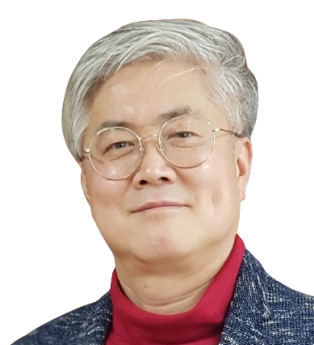
Professor Dr. Kim Hyun-Min
Pusan National University, South Korea
“Mathematics, Matrices, and Industrial Mathematics”
Abstract
A matrix equation asks a simple question: given F(X) = 0, what matrix X solves it? This talk looks at this question through several examples, including the square root of a matrix and quadratic matrix equations that appear in vibrating systems such as bridges and buildings. It also looks at matrix equations that describe population growth, and newer work on matrix and tensor functions, an active and growing area of research. These ideas connect closely to artificial intelligence, since a neural network is built from matrices, and training it means solving a large optimization problem. This links matrix theory, algorithms, and optimization directly to the themes of this conference. The talk then moves from theory to real use: pricing financial products through simulation, planning sustainable fishing over several years, modeling eye shape for automatic medical image analysis, and reducing waste in factory production. Together, these examples show that industrial mathematics is not a small side branch of theory, but a natural next step, where mathematics meets real industry problems and mathematicians must be ready to try new tools without fixed assumptions.
Academic Keynote Speaker

Professor Dr. Normah Maan
Universiti Teknologi Malaysia, Malaysia
“Mathematical Foundations of AI for Precision Oncology:
A Delay–Fuzzy Control Framework for Tumour–Immune–Metabolic Dynamics”
Abstract
Breast cancer remains one of the most challenging diseases to model due to the complex interactions among tumour cells, immune responses, metabolic regulation and therapeutic interventions. Understanding these interconnected biological processes requires mathematical frameworks that not only describe disease progression but also support prediction, optimisation and intelligent decision-making. This keynote presents a controloriented mathematical modelling framework that integrates tumour growth, natural killer (NK) cells, CD8+ T cells, glucose-mediated metabolic dynamics, immune suppression, treatment delay and parameter uncertainty within a unified delay differential equation model.
The presentation demonstrates how advanced mathematical modelling can reveal the dynamic mechanisms governing tumour progression, immune surveillance and immune escape while accounting for biological uncertainty through fuzzy modelling. The incorporation of optimal control theory provides a systematic approach for identifying treatment strategies that minimise tumour burden while improving therapeutic efficiency.
Numerical investigations further illustrate how hyperglycaemia, delayed immune activation and treatment timing influence long-term disease outcomes and therapeutic effectiveness.
Beyond the mathematical analysis, this keynote highlights the emerging role of artificial intelligence in mathematical oncology, where AI-driven parameter estimation, model calibration, predictive analytics and personalised treatment optimisation complement mechanistic mathematical models. The integration of mathematical modelling, optimal control and artificial intelligence offers a promising pathway towards precision medicine and intelligent healthcare systems. More broadly, this work illustrates how industrial mathematics can bridge mathematics, biomedical science and AI to address complex realworld healthcare challenges and support evidence-based clinical decision-making.
Industry Keynote Speakers

Mr Reza Ali
Director of AI Policy, AI Malaysia Berhad
“Towards Negara AI 2030”
Abstract
Malaysia’s ambition to become a Negara AI is not one institution’s task, but a whole-of-nation effort spanning government, industry, and academia. This keynote traces that journey through the National AI Action Plan 2026 to 2030 (Negara AI 2030) and the evolution of the National AI Office into AI Malaysia, connecting national policy to the mathematical and statistical foundations industry needs to turn AI ambition into deployable, trustworthy systems. Drawing on Malaysia’s experience building AI capability under real institutional constraints, it offers a candid view of what whole-of-nation AI coordination actually demands.

Mr Mustaffa Ramly
Lead Data Scientist, AirAsia Malaysia
“Mathematics and AI Behind AirAsia Operations”
Abstract
Optimizing airline operations, such as crew scheduling, involves solving massive integer programming problems where generating all possible solutions (e.g., crew pairings) is intractable. The Branch and Price algorithm is a standard approach for these problems, but its performance is often limited by the computational bottleneck of its pricing subproblem—the search for new, cost-effective columns. This research details a massively parallel Artificial Intelligence (AI) framework, inspired by the principles of swarm intelligence and Ant Colony Optimization (ACO), to address this challenge. The proposed framework, termed DSE-ACO (Decentralized, Self-adaptive Ant Colony Optimization), models the pricing subproblem as a constructive process where a swarm of distributed computational “ants” concurrently explores the vast solution space. These agents are guided by a shared, dynamically updated pheromone matrix, which acts as a collective memory, enabling the AI system to learn and adapt its search strategy over time based on problem-specific heuristic information derived from the Restricted Master Problem’s dual variables.
The architecture is designed for modern cloud-native environments, employing a master-worker paradigm with a Central Column Repository (CCR) to decouple the asynchronous generation of columns from the synchronous solving of the master problem. Furthermore, the framework’s performance is enhanced by a hybrid AI approach known as Focused Exact Search (FES), which combines the heuristic search of ACO with the precision of traditional exact solvers to intensify the search in promising, high-pheromone regions, preventing premature convergence and improving solution quality. By combining the exploratory power of AI with the rigor of mathematical optimization within a scalable, parallel architecture, this framework offers a robust and effective strategy to significantly accelerate the convergence of Branch and Price for previously intractable optimization problems in airline operations and other domains.
ISMI2026 Invited Speakers

Assistant Professor Dr. Busayamas Pimpunchat
King Mongkut’s Institute of Technology Ladkrabang, Thailand
“A Hybrid Machine Learning and Mixed-Integer Linear Programming Approach for Sustainable Biomass Circular Economy in Community Enterprises”
Abstract
This paper presents a novel framework integrating machine learning (ML) and mathematical optimization for managing agricultural waste in a community enterprise focusing on coconut production. A hybrid approach is proposed to tackle the seasonal nature of biomass supply. First, an ML model is developed to predict the generation of coconut by-products (husks and shells) from a 40-acre plantation. Second, the predicted values serve as parameters for a Mixed-Integer Linear Programming (MILP) model designed to optimize the allocation of biomass across various processing alternatives, maximizing economic value while adhering to operational constraints. The preliminary result shows that the proposed model provides a superior decision support tool for achieving zero-waste goals in local green industries, showcasing the practical application of AI-powered industrial mathematics.

Professor Dr. Intan Muchtadi Alamsyah
Institut Teknologi Bandung, Indonesia
“Portfolio Optimization Using Topological Data Analysis: Persistence Landscapes and Wasserstein Distance for Financial Risk Modeling“
Abstract
Portfolio optimization aims to maximize expected return while minimizing investment risk. Classical portfolio models rely heavily on statistical quantities such as volatility and covariance, which may not fully capture nonlinear structures in financial time series. In this paper, we investigate the use of Topological Data Analysis (TDA) for portfolio optimization by extracting topological features from historical stock returns. Weekly return series are first transformed into point clouds using Takens embedding, followed by Vietoris-Rips filtrations to compute persistent homology. Persistence landscapes are then employed to define a TDA Norm, which serves as a topological descriptor of the underlying dynamics. At the same time, Wasserstein distance between persistence diagrams is used to construct a topological similarity measure between stocks. These quantities are incorporated into a multi-objective portfolio optimization framework, which is solved using the Non-dominated Sorting Genetic Algorithm II (NSGA-II). The proposed approach is evaluated using weekly prices of twenty Indonesian consumer non-cyclical stocks. Experimental results indicate that the TDA Norm in dimension zero is strongly related to stock volatility. In contrast, the Wasserstein-based similarity matrix provides a meaningful approximation of the classical covariance structure. The resulting efficient frontiers are comparable to those obtained using conventional statistical methods while offering additional geometric insights into market behavior. The study demonstrates that persistent topological descriptors can serve as informative features for financial risk modeling and portfolio construction. Future work includes extending the proposed framework to dynamic markets and multiparameter persistent homology.

Associate Professor Dr. Wibawati Marsudi
Institut Teknologi Sepuluh Nopember, Indonesia
“A Robust MEWMA Control Chart Based on the Fast MCD Estimator for Water Production Quality Monitoring”
Abstract
The Multivariate Exponentially Weighted Moving Average (MEWMA) control chart is widely used for monitoring multivariate processes because of its ability to detect small and moderate shifts more effectively than conventional control charts. However, the performance of the classical MEWMA chart depends on the accurate estimation of the process mean vector and covariance matrix, which can be severely affected by non-normality and outlying observations commonly found in industrial and environmental data. This study proposes a robust MEWMA control chart based on the Fast Minimum Covariance Determinant (Fast MCD) estimator. By providing robust estimates of multivariate location and dispersion, the Fast MCD estimator reduces the influence of extreme observations and improves monitoring performance under non-normal process conditions. A smoothing parameter of λ = 0.3 was employed to enhance the sensitivity to gradual process shifts while maintaining robustness against data contamination. The novelty of this research lies in integrating the Fast MCD estimator within the MEWMA framework for the simultaneous monitoring of three critical water production quality characteristics: turbidity, pH, and residual chlorine. The proposed methodology was applied to operational water quality data consisting of 331 and 121 observations in Phases I and II, respectively. After removing out-of-control observations, Phase I successfully established a stable in-control baseline with an upper control limit (UCL) of 13.79. Using this robust reference model, Phase II monitoring identified 47 out-of-control signals, indicating potential process deterioration and quality variations. The results demonstrate that the Fast MCD-based MEWMA chart provides reliable control limits and effective detection of multivariate process shifts, making it a valuable early warning tool for water quality assurance and operational decision-making.

Professor Dr. Nor Haniza Sarmin
Universiti Teknologi Malaysia, Malaysia
“On the Randić Index of g-Noncommuting Graphs Associated to Dihedral Groups with Applications to Molecular Structures”
Abstract
Topological indices are widely used in mathematical chemistry and applied network analysis to encode structural information of complex systems into numerical descriptors. Among these, the Randić index is a classical degree-based invariant with proven effectiveness in capturing branching, connectivity, and structural complexity in molecular graphs. At the same time, algebraic graph theory offers a principled approach for modelling symmetry-driven interactions through graphs associated with finite groups. This study investigates the Randić index of the g-noncommuting graph associated with dihedral groups. The g-noncommuting graph generalises the classical noncommuting graph by fixing a group element g and defining adjacency via non-commutation relative to g, allowing finer structural discrimination. Explicit expressions for the Randić index are derived by analysing degree distributions and adjacency patterns arising from different choices of g in dihedral groups. These results demonstrate how algebraic properties such as element order and symmetry classes influence connectivity measures relevant to structural modelling. From an applied perspective, the proposed algebraic graph framework is connected to molecular structures of selected drugs used in cancer treatment, for instance CUD-907, CUC-101, and triciferol. By utilising isomorphisms of point groups that reflect molecular symmetries, the g-noncommuting graph provides a structured representation of molecular connectivity. The resulting Randić index values serve as symmetry-informed descriptors that can support molecular informatics, comparative structural analysis, and data-driven modelling workflows. Overall, this work illustrates how algebraic and graph-theoretic invariants offer interpretable and mathematically grounded tools for industrial applications involving molecular structures, complex networks, and symmetry-based modelling.

Professor Dr. S. Sarifah Radiah Shariff
UiTM Shah Alam, Malaysia
“An NLP-Based Framework for Risk Identification and Prioritisation in the NEV Supply Chain“
Abstract
The increasing complexity and digitalisation of New Energy Vehicle (NEV) supply chains require effective approaches to identify and prioritise emerging risks. This study develops an integrated approach combining Transformer-based text classification with Analytic Hierarchy Process (AHP) and fuzzy comprehensive evaluation for NEV supply chain risk analysis. First, 1,000 English open-source risk records were classified into six categories: operational, supply, logistics, information and data security, financial and inventory, and environmental/ESG/compliance risks. The dataset was developed through a two-stage human annotation and adjudication process. BERT and RoBERTa were evaluated using standard fine-tuning, class-weighted loss, and focal loss. Results demonstrate that Transformer-based models can effectively organise unstructured risk information into structured categories, with RoBERTa using standard fine-tuning achieving the strongest performance. Class-weighted loss improved several configurations, while focal loss showed no consistent advantage. Second, AHP was applied to prioritise the identified risk categories and underlying factors based on expert judgement, followed by fuzzy comprehensive evaluation. Information and data security risks received the highest priority, followed by supply and operational risks. At the secondary level, BMS-related failures, supply shortages or disruptions, software instability, critical material dependence, and component-level defects were ranked among the most important risk factors. These findings highlight the importance of digital reliability, supply continuity, and battery-related technical stability in NEV supply chains. By combining automated risk signal screening with expert-based prioritisation, the study provides a structured methodological basis for converting unstructured risk information into actionable risk intelligence and supporting more systematic NEV supply chain risk monitoring.
MJSMSM2026 Invited Speakers

Professor Dr. Pierluigi Cesana
Institute of Mathematics for Industry, Kyushu University, Japan
“Mathematical Modeling and AI for Materials Design and Chemical Innovation”
Abstract
In this talk, I will present examples from materials science and chemistry showing how AI methods combined with human scientific expertise can support the design, optimization, and control of advanced materials and chemical systems. The focus is on approaches that remain effective in small-data regimes by incorporating physical intuition, structural modeling, and domain knowledge.
Rather than relying on large datasets, these methods integrate modeling and scientific understanding to improve interpretability and robustness. Case studies will include molecular machines, and related systems, highlighting how mathematics, AI, and domain knowledge together enable new opportunities for discovery and control.

Dr. Jianquan Liu
Senior Director, NEC Laboratories Asia Pacific (NLAP), Singapore
“Engaging Video Analytics and Generative AI“
Abstract
In this talk, Dr. Jianquan Liu presents an industry perspective on the convergence of video analytics and generative AI. The talk begins with an overview of video analytics, covering advancements in action recognition, object tracking, human-object interactions, scene recognition, and behavioral pattern analysis. These technologies enable efficient extraction, retrieval, visualization, and summarization of video content. The presentation then explores the impact of generative AI, particularly large language models (LLMs), on video understanding. It discusses how LLMs enhance object recognition, semantic segmentation, action recognition, captioning, visual question answering, and storytelling.
Dr. Liu provides industry case studies to illustrate these applications while also addressing limitations and challenges. The talk introduces NEC’s narrative summarization framework, designed to tackle key challenges in video analytics. It concludes with a demonstration of “Video with LLM” technology, showcasing its practical application in automating traffic accident investigation reports. This presentation offers valuable insights into the current state and future potential of AI-driven video intelligence, bridging the gap between technical innovation and practical application for both industry professionals and general audiences.

Emeritus Professor Dato' Dr. Mohamed Ridza Wahiddin
Senior Fellow, MIMOS Berhad, Malaysia
“A Quantum Machine Learning Framework for Hybrid Anomaly Detection in Cyber Financial Systems“
Abstract
Quantum machine learning (QML) is increasingly explored as a framework for modelling complex, high-dimensional systems characterised by nonlinear interactions and rare events. In parallel, cyber incidents are being recognised as potential sources of financial instability as digitalisation intensifies interdependence between technological infrastructures and financial markets. Existing monitoring tools typically analyse cyber and market indicators separately, limiting their ability to detect early stage instability arising from their interaction. This paper proposes a conceptual hybrid quantum–classical anomaly detection architecture for cross-domain systems, with cyber–financial stability serving as a motivating application. The framework integrates cyber and market indicators into a unified representation through quantum feature mapping, with the potential to model nonlinear dependencies that are difficult to capture using classical methods. A Grover inspired amplitude amplification mechanism is incorporated to enhance the identification of rare or subtle instability signals indicative of emerging cyber–financial stress.
Drawing on established financial stability frameworks from the IMF and CPMI–IOSCO, the proposed architecture illustrates how quantum-enhanced learning can support early-warning analysis in interconnected cyber–physical systems. As a conceptual study, this work establishes a foundation for future empirical validation, simulation-based stress testing, and the development of quantum enhanced monitoring and supervisory tools aimed at strengthening financial stability in an increasingly digital and interconnected environment.

Associate Professor Dr. Atsushi Tero
Institute of Mathematics for Industry, Kyushu University, Japan
“Mathematical Modeling of Formation, Adaptation, and Repair in Networks”
Abstract
Adaptive networks appear in many biological, social, and artificial systems, including slime mold transport networks, vascular systems, plant veins, road networks, and infrastructure systems. Although these systems differ greatly in scale and material, they often share common features: local responses to flow or demand, global improvement of transport efficiency, robustness against damage, and reorganization under changing environments. In this talk, I will introduce mathematical models for adaptive network dynamics and discuss how they can provide a common theoretical framework for understanding network formation, optimization, and repair.
Starting from biological transport networks such as Physarum and vascular systems, I will explain how simple feedback rules between flow and conductance can generate efficient and robust network structures. I will then discuss extensions toward damaged or externally repaired networks, where the order and location of intervention can strongly affect recovery. These examples suggest that adaptive networks can be studied not only as biological phenomena but also as a general mathematical principle connecting living systems, infrastructure, and collective organization.
